
Banking News – Over the past few years, Nepal’s information technology sector has quietly but steadily built momentum. What was once seen as a limited, domestic-focused industry is now showing the confidence to think globally. This shift did not happen by chance. It is the outcome of sustained effort by entrepreneurs, policy reforms by the government, and a growing recognition that IT services can become one of Nepal’s strongest export engines.
Reforms introduced by the Ministry of Finance played a catalytic role in this journey. Simplifying company registration, revising foreign direct investment limits, and making tax policies more predictable sent an important signal to both domestic and international investors. The results were visible. Two years ago, around 40 IT companies were established with foreign investment. Just a year later, that number rose sharply to nearly 400. This growth reflects not only policy support but also the readiness of Nepali talent to compete beyond borders.
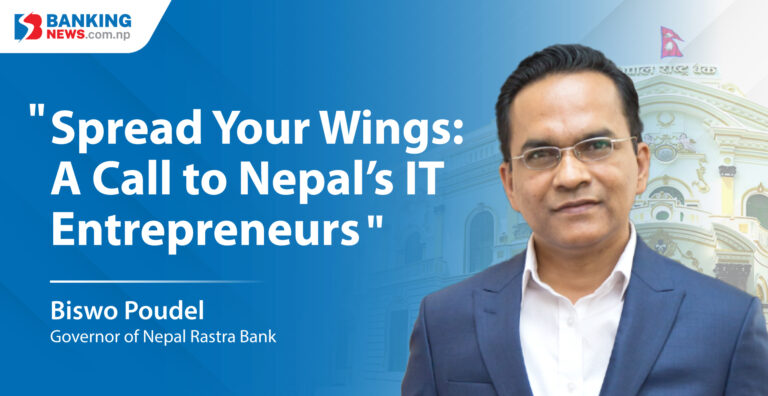
After assuming office, Dr. Bishwo Poudel, Governor of Nepal Rastra Bank, pushed this momentum further. Recognizing that global ambition requires global presence, the central bank introduced landmark provisions that directly empower Nepali IT companies. Export-oriented firms are now allowed to invest up to one million US dollars abroad, enabling them to establish overseas offices, acquire technology, or enter strategic partnerships. Even companies that have not yet started exporting are permitted to invest up to 20,000 US dollars, giving startups the confidence to test international markets.
Equally important is the assurance that these limits are not rigid. The central bank has clearly communicated that policies will be reviewed and refined based on results. This outcome-based approach builds trust within the private sector and reinforces the idea that regulators and entrepreneurs are working toward the same goal: sustainable growth.
Listening to investor concerns has also been a priority. Foreign investors often highlighted excessive paperwork as a barrier to doing business. Addressing this, Nepal Rastra Bank removed the requirement to obtain central bank approval for profit repatriation. While this may seem like a technical adjustment, its impact is significant. It signals openness, reduces friction, and improves Nepal’s credibility as an investment destination.
These steps carry even greater weight when viewed in context. As recently as 2021, foreign investment abroad was restricted. Moving from that position to actively encouraging Nepali companies to invest globally marks a clear shift in mindset. It reflects a long-term vision where Nepal is not just a consumer of technology but a producer and exporter of high-value digital services.
Governor Poudel’s message to the youth is clear and confident. This is the time to build, innovate, and take risks. Launch new products. Look beyond borders. Believe that global success is possible from Nepal itself. Spread your wings and commit to hard work, because the world market is open to those who are prepared.
The banking sector, under this leadership, stands firmly behind Nepal’s IT entrepreneurs. Access to policy support, regulatory clarity, and a pro-export mindset creates fertile ground for growth. With talent as its strength and policy as its backbone, Nepal’s IT sector is being encouraged not just to grow, but to fly.

 About Us
Comment