
Banking News – The Federation of Nepalese Chambers of Commerce and Industry (FNCCI), in collaboration with the U.S. Embassy, has organized a one-day orientation program on “AI for In-depth Industry Analysis: Priority Sectors of Nepal.” During the event, business leaders emphasized that the adoption of artificial intelligence (AI) is essential to enhance the competitiveness of Nepali businesses.
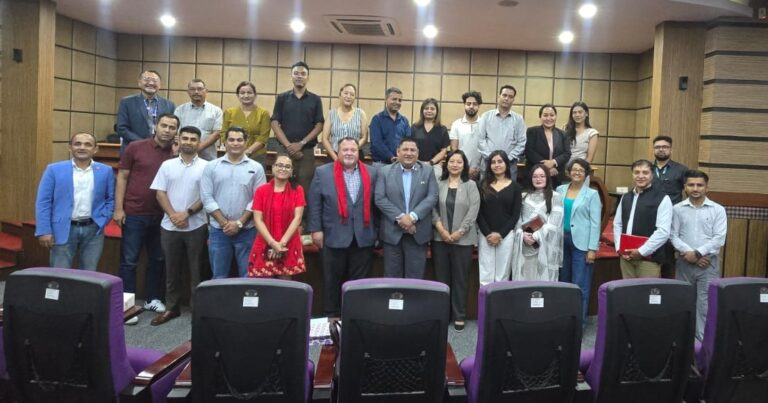
Speaking at the program, FNCCI Vice President Prabal Jung Pandey said that artificial intelligence (AI) has become a key driver for improving the productivity, competitiveness, and innovation of Nepal’s private sector. He stressed that Nepal should accelerate technology-driven economic growth through the responsible use of AI, improved digital infrastructure, skills development, and policy reforms.
Pandey also emphasized the importance of collaboration between the government, private sector, and international partners to build an AI ecosystem tailored to Nepal’s needs.
“Interest in AI is growing among Nepali entrepreneurs, startups, and innovators. AI has significant potential in customer service, digital payments, fintech, smart agriculture, tourism promotion, healthcare, and education. With the right policies, digital infrastructure, skills development, and investment, Nepali youth can become creators of AI-based solutions rather than just consumers of technology,” he said.
The program also featured David Sweisgood, Founder and Chief AI Officer of Lift.ai (Lift Dot AI), who shared insights into the commercial applications of AI, global best practices, and the opportunities and challenges of AI in Nepal’s priority sectors. He encouraged participants to continuously practice and develop their AI skills to maximize its benefits.
FNCCI Central Executive Member Juna Mathema highlighted that in today’s era of digital transformation, AI is no longer just an opportunity but a necessity for the private sector. She said that connecting Nepali industries and businesses with modern technology while investing in innovation, research, and digital skills development would significantly enhance the country’s economic competitiveness.
During the interactive session, business leaders, entrepreneurs, and representatives from various sectors raised questions regarding the implementation of AI in their businesses, including challenges related to data management, market expansion, customer service, and production management.
The event was attended by FNCCI office bearers, executive committee members, representatives of commodity associations, entrepreneurs, business leaders, and stakeholders from Nepal’s information technology sector.

 About Us
Comment