
Banking News – Hundreds of consumers queued for hours at the National Trading Limited (NTL) branch in Teku, Kathmandu, enduring sun, rain, and muddy conditions to purchase LPG cooking gas, amid continued concerns over the distribution system despite official assurances of adequate supply.
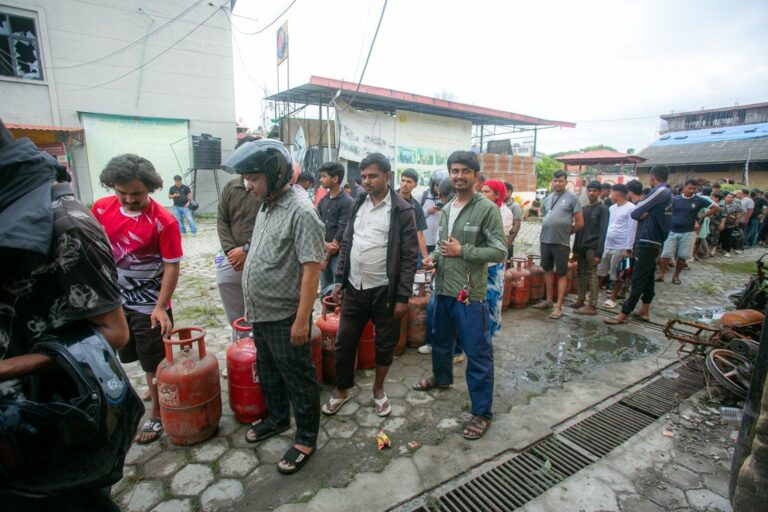
Since early morning, consumers carrying gas cylinders by hand, on their shoulders, and on motorcycles gathered outside the distribution center, waiting for their turn to receive cooking gas.
The Teku branch distributes LPG cylinders only between 11:00 a.m. and 5:00 p.m., resulting in heavy crowds during the limited service hours. Consumers were seen carrying cylinders from various brands, including Sugam Gas, Nepal Gas, Everest Gas, LP Gas, Rajdhani Gas, and Triveni Gas, while standing in long queues regardless of the weather.
Meanwhile, officials at the Nepal Oil Corporation (NOC) maintained that LPG supply remains normal, stating that gas industries are receiving regular supplies and LPG-loaded bullet tankers continue to enter Nepal from India without disruption. According to the corporation, there is no shortage of LPG in the market.
Despite these assurances, consumers have called for a more organized distribution system, including the introduction of token-based or online registration mechanisms to reduce long physical queues.
Many consumers complained that the current first-come, first-served system creates significant hardship, particularly for senior citizens, women, and persons with disabilities, who are forced to wait for extended periods.
Consumer rights advocates have also urged authorities to strengthen market monitoring. They called on the Nepal Oil Corporation, in coordination with the Department of Commerce, Supplies and Consumer Protection, to conduct regular inspections of LPG dealers across Kathmandu to verify actual stock levels and prevent any artificial shortages or black marketing.
They emphasized that issuing statements claiming adequate gas supply alone is insufficient, stressing that the government’s primary responsibility is to ensure consumers can easily obtain LPG from their local dealers without unnecessary delays.

 About Us
Comment