
Banking News – Former President of the Federation of Nepalese Chambers of Commerce and Industry (FNCCI), Rajendra Malla, has urged the government to reconsider its tax policy on electricity, arguing that imposing VAT on electricity would increase the financial burden on consumers and raise production costs for businesses and industries.
Making his views public, Malla said the decision to impose VAT on electricity despite sufficient power generation during the monsoon season was not a people-oriented policy and could further increase the cost of living.
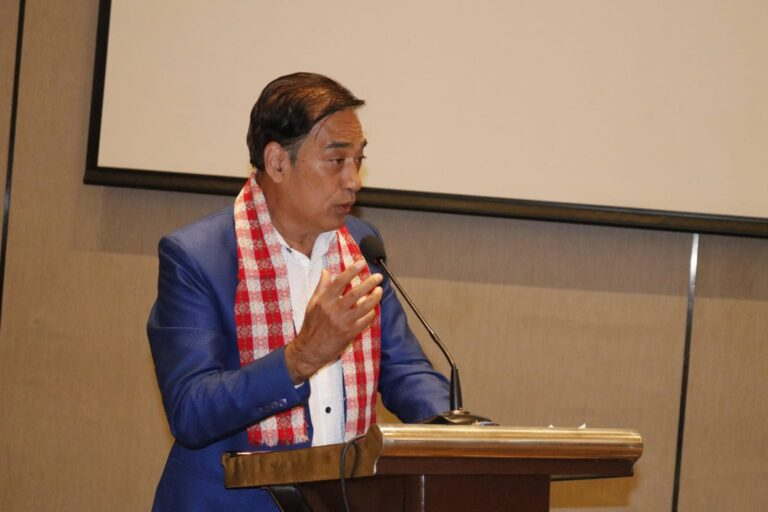
He said the provision to levy VAT on electricity consumed by household, commercial and industrial users would create an additional economic burden on the public. According to him, the decision to impose 5 percent VAT on household consumers and 13 percent on commercial and industrial consumers would increase production costs for industries, businesses and the service sector, ultimately affecting the prices of goods and services.
Malla said, “The provision of 5 percent VAT for household consumers and 13 percent for commercial and industrial consumers is a decision that places an additional burden of inflation on the public.” He argued that at a time when electricity production and consumption should be increased to expand industries, businesses and employment, such a tax policy would raise production costs and make goods and services more expensive.
According to Malla, Nepal’s economy should currently be focused on expanding production, industrial recovery and creating employment. However, adding a tax burden to electricity, which is a fundamental input for production, would affect industrialists, businesses and ultimately consumers.
“At a time when the economy needs to be revitalized, increasing the tax burden instead of providing relief to the public is the wrong direction for economic policy,” Malla said. He stressed the need for policies that provide affordable, accessible and competitive electricity rather than making power more expensive.
Malla also emphasized the need to expand domestic electricity consumption as power generation continues to increase. He said providing affordable and reliable electricity to industries, factories, tourism, agriculture and other productive sectors could support increased production, employment generation and broader economic activity.
He warned that an additional tax burden on industrial consumers could increase production costs and weaken the competitiveness of Nepali industries.
Malla urged the government to adopt long-term policies that not only focus on increasing revenue but also encourage production and investment.
He called on the government to reconsider the tax policy on electricity, provide relief to industries, businesses and general consumers, and adopt policies that support the expansion of economic activity.

 About Us
Comment