
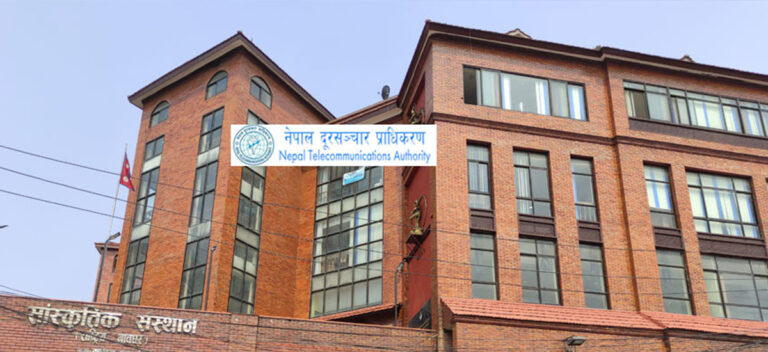
Banking News – Nepal Telecommunications Authority has made public the draft of the Integrated Telecommunications Policy. The draft has been prepared with the objective of integrating the various existing policies related to the telecommunications sector and making the sector timely, competitive, and effective in line with the development of modern technology.
The draft has proposed integrating the Long Term Policy for Information and Communication Sector, 2002, Telecommunications Policy, 2004, Broadband Policy, 2014, and Information and Communication Technology Policy, 2015. Similarly, it also aims to facilitate and effectively implement the Satellite Policy, 2020, National Cyber Security Policy, 2022, Telecommunications Service Radio Frequency (Allocation and Pricing) Policy, 2022, and National Artificial Intelligence Policy, 2025.
Since some of the targets set by past policies have already been achieved, the draft has been prepared to set new targets and make the policy timely. The Authority has stated that a new policy is necessary to bring opportunities created by modern technology to the general consumers.
The draft aims to expand Nepal’s digital transformation through the use of telecommunication technology, make daily life easier, encourage inclusive economic growth, and ensure equal access to digital opportunities for all citizens. The goal is to contribute to the country’s economic and social development through the utmost use of information and communication technology while providing quality, safe, reliable, and accessible telecommunication services.
According to the proposed policy, the target is to expand access to telecommunication services with broadband of at least 50 Mbps capacity to 80 percent of the population in the next five years. In the next ten years, such access has been proposed to be expanded to 98 percent of the population.
Similarly, the target is to limit the tariff for basic broadband services to 2.4 percent of per capita gross national income within five years and to 1.5 percent within ten years. The draft has proposed a target to increase the direct contribution of the information and communication technology sector to the gross domestic product to four percent in five years and seven percent in ten years.
Promoting digital skills development, the draft has proposed targets to achieve digital literacy of 60 percent in five years and 85 percent in ten years. The policy aims to promote a systematic, transparent, and competitive telecommunications market while encouraging innovation and investment.
The draft proposes expanding telecommunication infrastructure in remote and rural areas, using modern technology, and reducing the digital divide through effective public-private partnerships. The draft mentions that capacity development of human resources required for the telecommunications sector, study and research in modern technology, and the use of telecommunication technology in various sectors of national life will also be encouraged.
The draft proposes amending existing telecommunication-related laws in a timely manner, making implementation mechanisms effective, strengthening institutional capacity, and enhancing the efficiency of human resources. Similarly, priority will be given to building a society based on skills and knowledge including digital rights and cyber security.
The draft proposes a policy to ensure nationwide availability and access of modern telecommunication services to all citizens and to make the telecommunication system quality, reliable, safe, and resilient. The objective is to make the telecommunications sector competitive and sustainable through the cooperation of the private sector and foreign investors while further facilitating the licensing and radio frequency distribution process.
The draft has been made public to update the policy as telecommunication services once limited to voice have transformed into information and communication technology services with the expansion of the internet, and as they become useful in enhancing productivity in sectors including education, health, tourism, industry, and energy.

 About Us
Comment