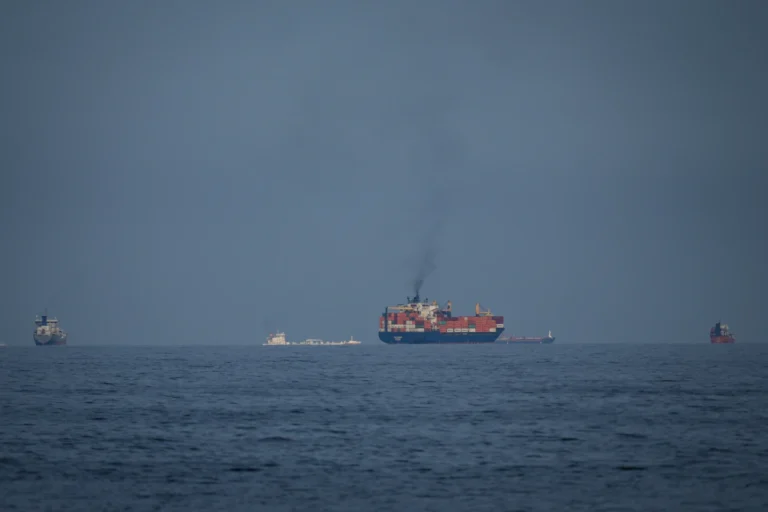

Kathmandu – Iran has announced a new policy that would allow only oil tankers trading in Chinese yuan to pass through the strategically important Strait of Hormuz, in what analysts see as a move aimed at reducing global dependence on the US dollar.
The development comes amid rising tensions in West Asia following recent military confrontations involving Iran, United States, and Israel. According to international media reports, Iran is attempting to challenge the dominance of the US dollar in global oil trade by promoting transactions in the Chinese yuan.
According to reports cited by CNN, senior Iranian officials have indicated that only oil tankers purchasing crude oil in Chinese currency would be allowed safe passage through the Strait. Currently, most global oil transactions are conducted in US dollars, with limited exceptions such as Russian oil, which is increasingly being traded in rubles and yuan following Western sanctions on Russia.
Iran’s move is being interpreted as part of a broader “de-dollarization” strategy aimed at weakening the global dominance of the US dollar in energy markets. Officials have suggested that tankers not complying with the yuan payment system could face restrictions while crossing the vital maritime route.
Reports also indicate that at least three oil tankers have recently come under attack in the region. While Iran has acknowledged involvement in some incidents, it has not accepted responsibility for all attacks. However, there is speculation that Iran-backed groups may have been involved.
Following recent regional tensions and leadership developments, Iran has also reportedly taken measures affecting oil trade involving US-allied countries, creating additional pressure in global energy markets. In this context, the yuan-based transaction policy is being seen as part of Iran’s broader economic and geopolitical strategy.
The Strait of Hormuz remains one of the world’s most critical oil transit chokepoints, with a significant portion of global petroleum supplies passing through the narrow waterway each day. Any restrictions in the region could have major implications for global energy prices and supply chains.

 About Us
Comment