
Banking News – After years of anticipation, the Nagdhunga–Sisnekhola Tunnel Road, Nepal’s first modern road tunnel, is being officially inaugurated today. The project is expected to ease chronic traffic congestion at the main gateway connecting the Kathmandu Valley with the rest of the country.
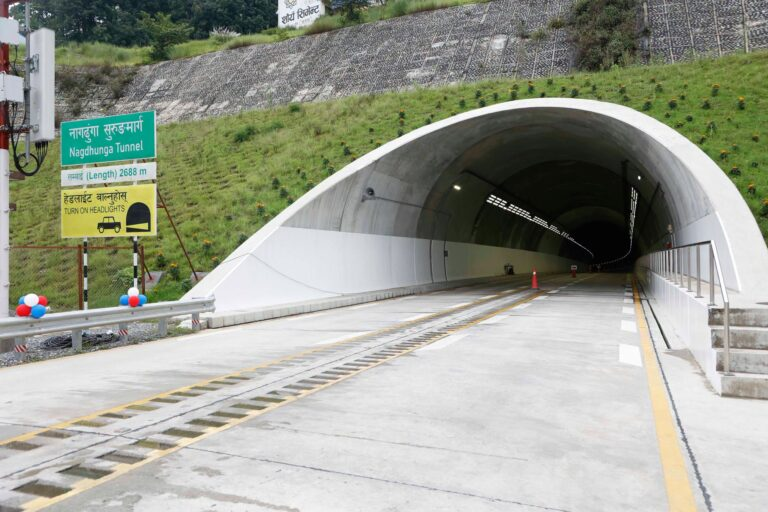
Here are five key facts about the landmark infrastructure project:
1. Built with JICA Concessional Financing
The tunnel was constructed entirely with concessional loan assistance from the Japan International Cooperation Agency (JICA), without borrowing from domestic banks. JICA provided a total of Rs. 21.5 billion in financing, including Rs. 16 billion in the first phase and Rs. 5.5 billion in the second phase. The Government of Nepal is required to repay the loan within 20 years.
2. Toll Revenue Will Cover Operations, Not Construction Costs
The toll fees collected from tunnel users are not intended to recover the project’s construction cost. Instead, the revenue will be used to finance the tunnel’s day-to-day operation, security management, and regular maintenance, ensuring its long-term sustainability.
3. Around 30% of Vehicles Expected to Use the Tunnel
Project officials estimate that at least 30% of the vehicles currently using the Nagdhunga road section will be diverted through the tunnel during the initial phase of operation. Based on this projection, the tunnel is expected to generate between Rs. 300 million and Rs. 350 million in annual toll revenue.
4. Vehicle-Specific Toll Rates and Entry Restrictions
The government has introduced different toll rates for inbound and outbound traffic, depending on the type of vehicle.
- Cars, Jeeps and Vans: Rs. 65 entering Kathmandu and Rs. 60 exiting.
- Medium-sized vehicles: Rs. 115 entering and Rs. 80 exiting.
- Large vehicles: Rs. 260 entering and Rs. 200 exiting.
- Heavy equipment: Rs. 600 entering and Rs. 250 exiting.
Meanwhile, motorcycles, scooters, fuel tankers carrying flammable materials, and pedestrians will not be permitted to use the tunnel due to safety regulations.
5. Expected to Reduce Traffic Congestion by 30%
With around 30% of vehicles expected to shift to the tunnel, authorities anticipate a similar reduction in traffic congestion on the existing Nagdhunga uphill and downhill road. This is expected to significantly reduce travel time, improve road safety, and provide a smoother journey for motorists using both the tunnel and the existing highway.
The Nagdhunga–Sisnekhola Tunnel Road Project is regarded as a major milestone in Nepal’s transport infrastructure, offering a safer, faster, and more efficient route into and out of the Kathmandu Valley while enhancing long-term connectivity and economic activity.

 About Us
Comment