
Banking News – Although the Nagdhunga–Sisnekhola Tunnel Road Project was built at a cost of more than Rs. 21.5 billion, the Government of Nepal has clarified that toll revenue will not be used to recover the project’s construction cost. Instead, toll collections will primarily finance the operation, maintenance, and safety management of the tunnel.
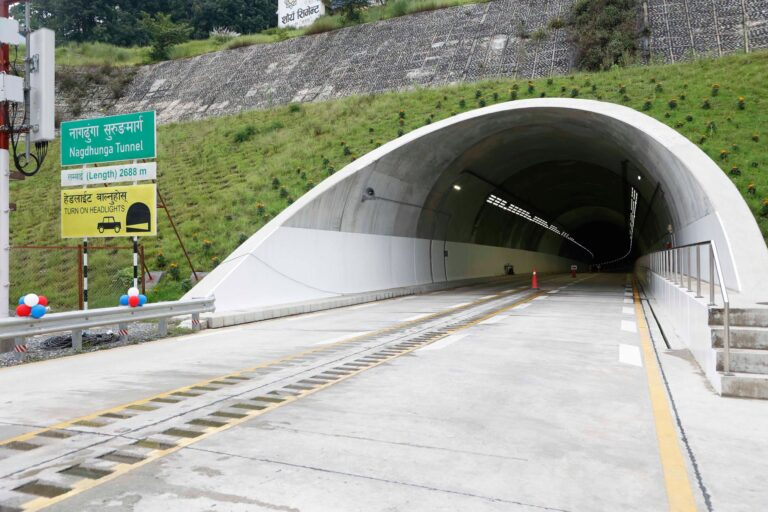
According to Project Director Engineer Saujanya Nepal, the project was financed entirely through concessional loans from the Japan International Cooperation Agency (JICA). JICA provided approximately Rs. 16 billion in the first phase and an additional Rs. 5.5 billion in the second phase, bringing the total financing to around Rs. 21.5 billion.
He said the Government of Nepal will repay the JICA loan over a 20-year period, while confirming that no loans from domestic banks were used for the project.
Toll Revenue Intended for Operations and Maintenance
Responding to questions about whether toll collections would recover the Rs. 21.5 billion investment, Engineer Nepal said the primary purpose of the toll is not to recoup construction costs.
“The objective is not to recover the construction investment. Toll revenue will be used to cover the tunnel’s operation and maintenance costs,” he said.
As a result, toll rates have not been determined based on recovering the total project investment.
Annual Toll Revenue Estimated at Rs. 300–350 Million
Project officials estimate that around 30% of the vehicles currently using the Nagdhunga road section will initially be diverted through the tunnel.
Based on these projections, the tunnel is expected to generate between Rs. 300 million and Rs. 350 million in annual toll revenue.
Reducing Traffic Congestion Is the Main Objective
The project aims to significantly reduce chronic traffic congestion on the Nagdhunga section, one of the busiest gateways connecting the Kathmandu Valley with the rest of Nepal.
According to the project office, diverting even a portion of traffic through the tunnel will reduce travel delays, improve traffic flow, and provide commuters with a safer and faster alternative to the existing winding mountain road.
Toll Cost Expected to Be Offset by Direct Savings
Engineer Nepal said motorists are expected to save an amount roughly equivalent to the toll they pay through reduced fuel consumption, vehicle wear and tear, and travel time.
He noted that the toll structure was determined using a scientific assessment of fuel savings, maintenance costs, tyre wear, and time efficiency, rather than being set arbitrarily.
In addition to direct fuel savings, the tunnel is expected to lower vehicle maintenance expenses, reduce transportation costs, and improve the efficiency of both passenger and cargo movement.
Long-Term Economic Benefits
Project officials believe the tunnel’s greatest economic benefit will come not from recovering construction costs, but from reducing indirect economic losses caused by traffic congestion, excessive fuel consumption, vehicle operating costs, and delays in the movement of people and goods.
With the project now entering its operational phase, authorities are preparing for the tunnel’s inauguration and public opening. Once fully operational, the Nagdhunga–Sisnekhola Tunnel Road is expected to become a major milestone in Nepal’s transport infrastructure, improving connectivity while supporting long-term economic productivity.

 About Us
Comment