
Banking News – Nurses staged a protest outside Bir Hospital in Kathmandu on Monday, accusing the government of failing to address long-standing issues in Nepal’s nursing sector and neglecting meaningful policy reforms.
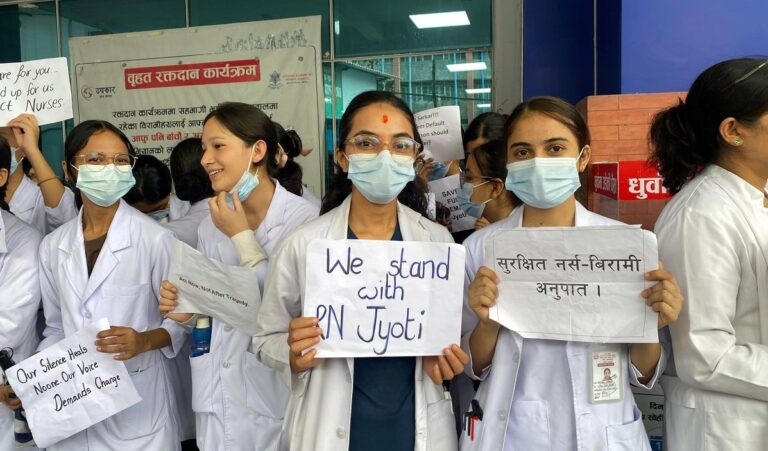
The demonstration coincided with the fifth day of the hunger strike launched by nurse Jyoti Ranabhat, with nurses from Tribhuvan University Teaching Hospital, Bir Hospital, and other healthcare institutions joining the protest to press the government to act on their demands.
Protesters called for quality nursing education, improved patient safety, fair salaries, dignified working conditions, and an end to labor exploitation in the healthcare sector. They carried placards bearing slogans such as “Implement the 15-Point Demands,” “Save Jyoti’s Life,” “Justice Delayed Is Life at Risk,” “A Clear Roadmap for Nursing Reform,” and “Save Nurses, Save Healthcare.”
The protesting nurses urged the government to immediately address the 15-point charter of demands put forward by Ranabhat. They alleged that previous agreements and commitments made by the government had not been implemented, despite repeated assurances, leading to growing frustration within the nursing community.
Meanwhile, the Nepal Medical Association (NMA) also appealed to the government to take immediate steps to protect Ranabhat’s life. In a statement issued on Monday, the association called for constructive dialogue and urged authorities to address her legitimate demands through negotiation and consensus.
Ranabhat is currently receiving treatment in the Intensive Care Unit (ICU) at Bir Hospital while continuing her hunger strike.
Nurses and medical professionals have urged the government not to ignore demands related to nursing sector reform, protection of healthcare workers’ rights, and improvements in the quality of Nepal’s healthcare services, warning that continued inaction could further impact the country’s health system.

 About Us
Comment