
Banking News – More than 70 percent of private cars currently imported into Nepal are electric vehicles (EVs), reflecting a sharp shift in consumer preferences following the government’s policies to promote electric mobility.
Lower operating costs compared with petroleum-fueled vehicles, environmental benefits and growing investment incentives have encouraged consumers to choose electric vehicles. The National Transport Policy 2083, recently unveiled by the Ministry of Physical Infrastructure and Transport, states that electric vehicles account for more than 70 percent of private cars imported into Nepal.
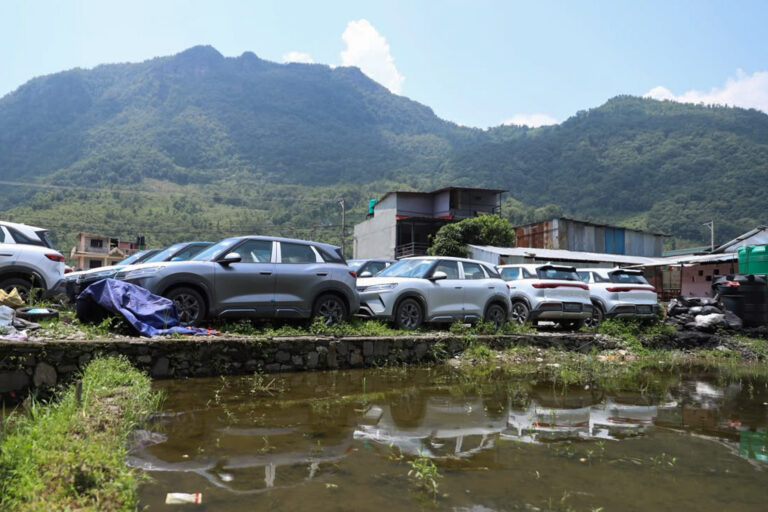
Nepal has also ranked second globally in terms of the market share of electric vehicles in new vehicle sales, behind only Norway. Former President of the NADA Automobiles Association of Nepal, Dhruva Thapa, said consumer interest in electric vehicles has been increasing steadily.
“More than 70 percent of the four-wheeled vehicles imported into Nepal are electric vehicles. This clearly shows the growing attraction toward EVs among consumers,” Thapa said, stressing that infrastructure such as charging stations and roads must also be developed alongside the growing imports of electric vehicles.
According to Thapa, electric vehicles priced between Rs. 1.5 million and Rs. 400 million are currently being imported into Nepal. He said Nepali consumers are increasingly interested in both affordable electric four-wheelers and premium EVs equipped with advanced features.
The National Transport Policy 2083 has also been introduced with a focus on promoting electric vehicles and charging infrastructure. The policy, approved by the Cabinet on Asar 24, 2083, aims to develop an integrated transport system that is safe, accessible, sustainable and competitive while contributing to economic growth, social inclusion and regional integration.
The government has also been pursuing initiatives through regional platforms such as BBIN, SASEC and BIMSTEC to strengthen regional connectivity, develop economic corridors and promote cross-border transportation. At the same time, Nepal has prioritized the development of climate-resilient, green and sustainable transportation systems in line with its commitment to the Paris Agreement.
Electric Vehicle Numbers Surpass 63,000
According to the National Transport Policy 2083, the total number of registered electric vehicles in Nepal had reached 63,280 by the end of fiscal year 2082/83.
By Falgun of fiscal year 2082/83, a total of 6.249 million vehicles had been registered across the country. More than 5 million of the registered vehicles are motorcycles, accounting for over 80 percent of the total vehicle fleet.
More Than 2,000 EV Charging Stations Established
According to Sagar Mani Adhikari, Assistant Manager of the Nepal Electricity Authority’s Charging Station Construction Project, around 2,000 electric vehicle charging stations have been established across Nepal.
“Charging stations for electric vehicles have now been established in almost every major city in the country,” he said. More than 100 charging stations have been established by the government, while the private sector has installed more than 1,900 charging stations.
Adhikari said the number of charging stations is increasing rapidly as consumer interest in electric vehicles continues to grow.
He also said the government should now focus more on promoting electric public transportation rather than limiting its focus to electric four-wheelers, arguing that such a policy would contribute to the long-term development of a more organized transportation system.
Electric Vehicle Import Situation
Nepal imported 10,845 electric vehicles worth Rs. 25.559 billion during fiscal year 2082/83, according to the Department of Customs. The imported vehicles ranged from 50 kW to 201 kW in capacity.
During the fiscal year, Nepal imported 3,680 electric jeeps, cars and vans with 50 kW capacity, worth Rs. 6.488 billion.
Similarly, 6,357 electric vehicles with capacities ranging from 51 kW to 100 kW were imported, with a total value of Rs. 16.498 billion.
A total of 798 electric vehicles with capacities between 101 kW and 200 kW, worth Rs. 2.501 billion, were also imported.
Likewise, 10 electric vehicles with 201 kW capacity, worth Rs. 700.74 million, were imported during the same fiscal year.
In comparison, Nepal imported 13,567 electric vehicles worth Rs. 31.745 billion in fiscal year 2081/82.
During fiscal year 2081/82, 4,732 electric jeeps, cars and vans with 50 kW capacity, worth Rs. 8.311 billion, were imported.
Similarly, 7,431 vehicles with capacities between 51 kW and 100 kW, worth Rs. 18.62 billion, were imported during the same fiscal year.
The country also imported 1,362 electric vehicles with capacities between 101 kW and 200 kW, worth Rs. 4.53 billion, in fiscal year 2081/82.
Former NADA President Thapa has suggested that the government introduce clear standards for electric vehicle imports. He also urged EV importers to bring necessary spare parts and equipment required for vehicle maintenance and repairs along with the vehicles.
The National Transport Policy 2083 notes that motorcycles account for more than 80 percent of Nepal’s total vehicle fleet, placing significant pressure on road capacity. The high concentration of two-wheelers has also contributed to increased accident risks, traffic congestion and air pollution.
The policy states that the government has been pursuing various policy and programmatic initiatives to promote environmental sustainability in the transportation sector.

 About Us
Comment