
Banking News – Nepal Police Inspector General Dan Bahadur Karki has emphasized the need for stronger safety features in vehicles and greater attention to road and vehicle engineering to reduce road accidents in Nepal. He made the remarks during the inaugural session of the NAIMA Nepal Mobility Expo 2026, organized by the Nepal Automobile Importers and Manufacturers Association (NAIMA).
Karki said the use of various types of electric vehicles has been increasing in recent years, making it essential to give greater priority to safety. He also highlighted the importance of social and spiritual mobility, noting that mobility is becoming broader and more dynamic over time.
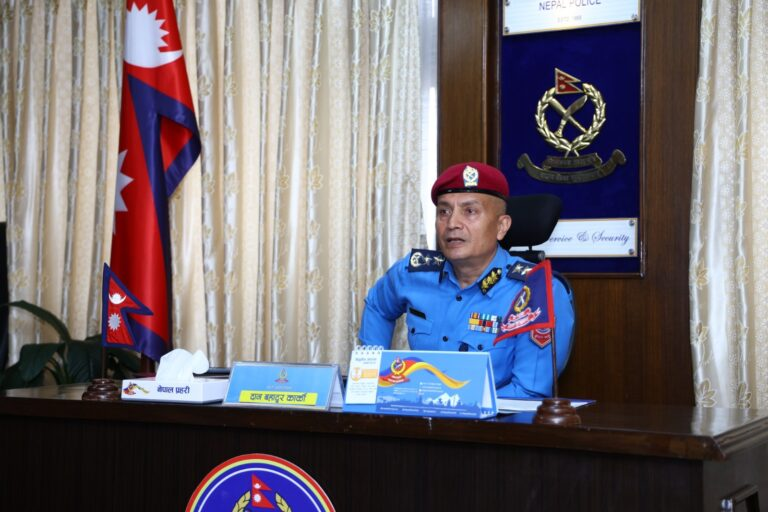
According to Karki, mobility enables businesses to expand from one place to another, creates employment and opportunities, and connects people with businesses, making safety and effective mobility systems increasingly important.
Expressing concern over the rising number of road accidents, he said vehicle manufacturers and stakeholders should prioritize safety features in new vehicles to help reduce accidents. He also stressed the importance of road engineering alongside vehicles that meet safety standards.
Karki said ensuring safer vehicles directly contributes to the safety of citizens using them. He added that automobile expos can create an environment for interaction among the vehicle industry, regulatory bodies and security agencies, and said the police would work to make its participation in such discussions more effective.
The Inspector General also emphasized the need to expand education and training related to vehicle engineering and road engineering.
According to Karki, Nepal recorded 29,988 vehicle accidents in fiscal year 2082/83, an increase of 3.2 percent compared with the previous fiscal year. On average, 82 vehicle accidents occur every day across the country.
“On average, 130 people are injured every day, while seven people lose their lives,” he said, adding that motorcycles account for 59 percent of the vehicles involved in accidents.
Karki said there is a tendency to attribute road accidents entirely to driver negligence, while weaknesses in road engineering are also major contributing factors. He pointed to improper road slopes, potholes and inadequate lane arrangements as examples of engineering deficiencies that can contribute to fatalities.
He stressed that drivers alone should not be blamed for road accidents and called for a comprehensive approach to road and vehicle safety. According to him, safety standards should be prioritized throughout the entire process, from vehicle manufacturing and road design to regulation and road use.
Karki also urged automobile businesses to improve after-sales services. He said public complaints have been increasing over inadequate after-sales services despite the growing availability of various vehicle brands in the Nepali market.
He further described unmanaged parking in Kathmandu Valley as a serious problem. He said roads often become congested because even educated and socially responsible citizens park their vehicles haphazardly.
Karki emphasized that improving road safety requires cooperation among the police, regulatory authorities, automobile industry, road engineers and the general public.

 About Us
Comment