
Banking News – The government has initiated preparations to establish one residential school each in all seven provinces for children with autism. Minister for Education and Sports, Sasmit Pokharel, informed that the necessary budget has already been allocated for the establishment of these schools.
Speaking at a discussion held in Dhangadhi on the “Standards for Operation and Management of Educational Programs for Children with Autism and Neurodiversity, 2083,” Minister Pokharel stated that consultations with stakeholders are underway to determine the modality for operating the schools. According to the Minister, the proposed residential schools will provide regular education along with essential therapy, healthcare services, and various creative activities for children with autism.
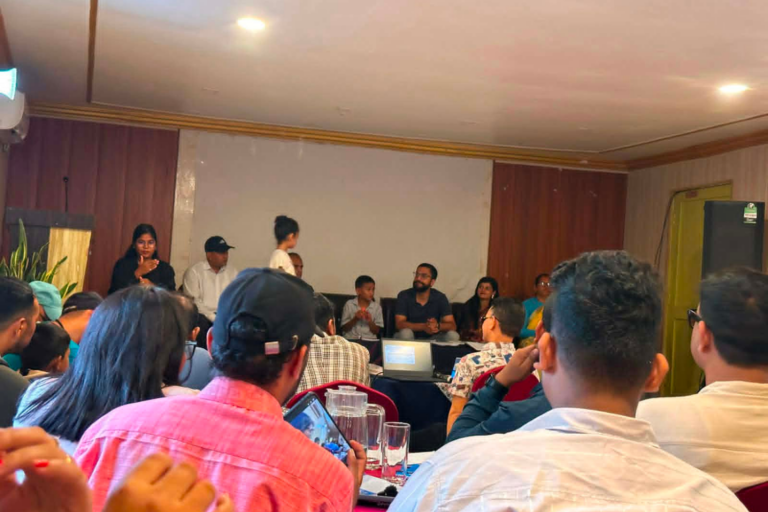
“We have announced the establishment of one residential school in each province for children with autism immediately after the formation of the government,” Minister Pokharel said. “The necessary budget has been arranged. We will prepare a detailed project report this year and move forward with the implementation process.”
Minister Pokharel stated that the draft of the standards has been prepared with the objective of providing necessary education, health services, and therapy to children with autism on a residential basis before enrolling them in mainstream schools. He emphasized that constructive suggestions from experts, parents, and stakeholders in the relevant field are essential to make the draft more effective. He also mentioned that autism-related issues will be prioritized in the upcoming Education Act, policies, and standards to clearly establish the basis for implementing government programs.
Noting that the number of children with autism and the challenges they face are increasing globally, Minister Pokharel reiterated that the government is serious about addressing the problems of these children and their parents.
Speaking at the program, Member of Parliament Sarita Mahato stressed that children with autism should not be viewed as a burden but rather given opportunities for development based on their interests, abilities, and talents. Mentioning that she herself is the mother of a child with autism, Mahato stated that she has been continuously advocating with the parliament and the government to prioritize this issue at the state level.
Parents participating in the program stated that they are finding it difficult to engage in employment and income-generating activities as they have to spend most of their time caring for their children. They demanded the establishment of care centers at the ward level, separate residential schools, and therapy centers. Parents also urged the government to create income-generating opportunities to improve their economic condition.
Representatives from both government and non-government sectors suggested that policies and programs should be formulated based on the collection of data on the actual number, condition, and needs of children with autism.
Chairman of the National Autism Care Center Society Nepal, Ramesh Basnet, stated that the needs of children with autism may differ from those with other disabilities, and therefore they must be addressed through special programs. Education Officer at the Department of Education, Deepak Majhi, informed about the provisions included in the draft standards being prepared and said that the government is moving forward with the necessary processes to address the problems of children with autism and neurodiversity.

 About Us
Comment