
Banking News – Minister for Energy, Water Resources and Irrigation, Biraj Bhakta Shrestha, has stated that preparations are underway to introduce seasonal electricity tariffs and provide electricity at concessional rates to high-consumption customers in order to increase domestic consumption of surplus electricity generated during the rainy season. During a discussion held in Biratnagar with representatives of the Morang Chamber of Commerce and Industry and the Morang Chapter of the Federation of Nepalese Chambers of Commerce and Industry, Minister Shrestha said the government is focused on making necessary improvements to the tariff structure to maximize the utilization of increased electricity generation during the rainy season in industries and other sectors.
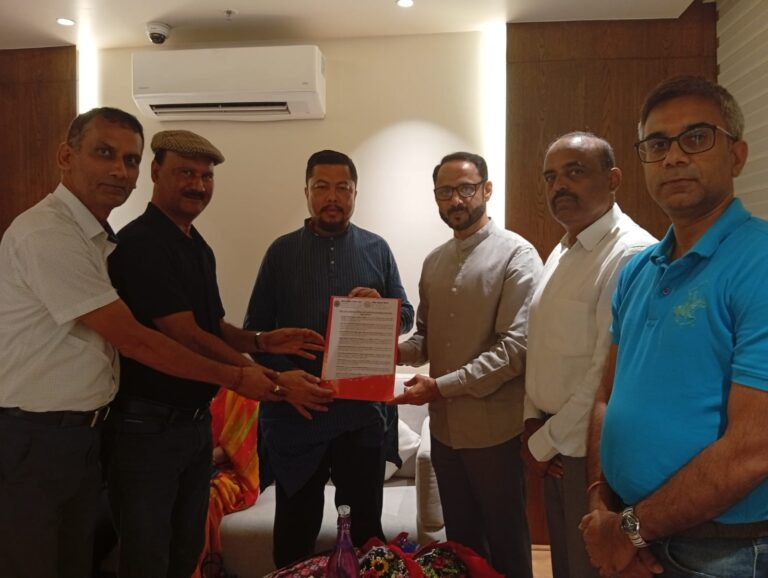
He informed that the government is working on making electricity tariffs more practical with the objective of reducing industrial production costs, increasing electricity consumption, and utilizing surplus electricity available in the system domestically. According to Minister Shrestha, nine new substations are being added in the Sunsari-Morang area. He stated that once these substations become operational, electricity supply in the region is expected to become more reliable and sustainable.
Noting that the electricity-related problems faced by industrialists and businessmen are a serious issue for the government, Minister Shrestha said the government is sensitive about providing continuous and quality electricity to industries and adjusting tariffs in a way that does not impose unnecessary additional burdens on industries due to electricity use. He stated that a system should be in place to obtain clear information about the availability of required electricity capacity, transmission lines, and supply infrastructure before establishing industries. He said that the Nepal Electricity Authority should regularly inform industrialists and businessmen about the available electricity capacity and infrastructure in various areas, and develop a system to clarify the status of electricity availability before industries are established.
Minister Shrestha informed that the Authority is preparing to hold regular consultations with industrialists and businessmen in the coming days to provide information about how much electricity is available in which areas, the status of additional capacity expansion, and when the required infrastructure for new industries will be ready. During the discussion, industrialists and businessmen said that immediate improvements are necessary in the electricity supply system to enhance the competitive capacity of the industrial sector. They demanded assurance of regular and quality electricity supply, speedy completion of the Birju and Keroun substations, and expansion of electricity infrastructure in the Katahari Industrial Area.
Similarly, industrialists also demanded the removal of demand charges to encourage productive industries. They stated that they are ready to invest, with the capacity to consume 5 to 50 megawatts of electricity, provided necessary permits and infrastructure for domestic electricity consumption are ensured. Industrialists also demanded that industries with paid-up capital exceeding Rs 100 crore be permitted to generate electricity for their own purposes.
Industrialists also drew attention to issues related to the quality and safety of electrical equipment. They demanded mandatory pre-testing of transformers and effective quality testing of conductors and cables. Industrialists also demanded the removal of Value Added Tax (VAT) levied on electricity.
They stated that reducing electricity tariffs and other costs would lower production costs and enhance the competitive capacity of Nepali industries. The discussion was attended by Nandakishor Rathi, President of the Morang Chapter of the Federation of Nepalese Chambers of Commerce and Industry, Anubhav Rathi, President of the Morang Chamber of Commerce and Industry, along with industrialists and businessmen from the Morang-Sunsari area. The discussion covered detailed deliberations on electricity supply, industrial infrastructure, tariff structure, and measures to increase domestic electricity consumption.

 About Us
Comment