
Banking News – Minister for Education and Sports, Sasmit Pokharel, has stated that the development of the School Education Bill has been placed as the government’s top priority. Speaking at a consultation program organized by the Ministry of Education and Sports on Sunday regarding the School Education Bill, she said the process of formulating the Education Act would be transparent and participatory.
Minister Pokharel expressed commitment that suggestions from stakeholders would not be limited to formal discussions but would be incorporated into the Act and regulations during the development of a student-friendly Education Bill. She stated that clear division of authority and effective coordination between the federal, provincial, and local levels is essential.
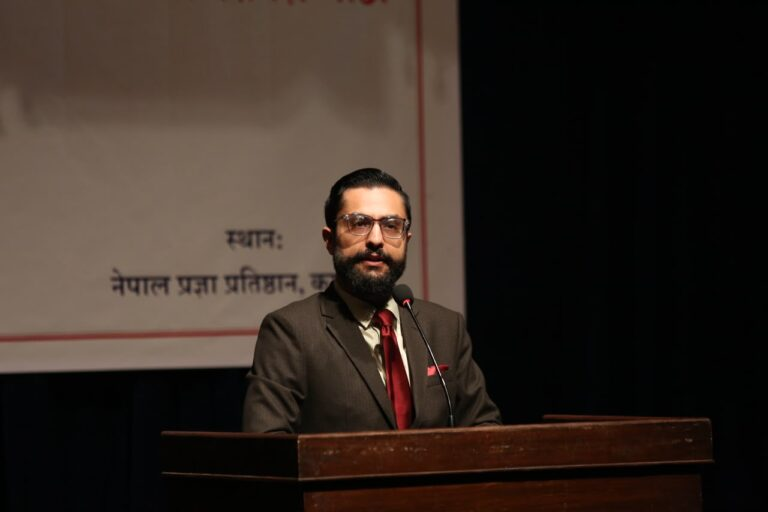
She mentioned that although there is a global practice of investing at least 20 percent of the total budget in education, Nepal has not been able to allocate sufficient budget to the education sector. Noting that approximately 70 percent of the education budget goes to local levels as grants, she highlighted the significant role of local governments in education reform and the facilities for teachers and staff.
Clarifying the remuneration of early childhood development facilitators and school staff, Minister Pokharel stated that the amount provided by the federal government is only a conditional grant. She cited the practice of Kathmandu Metropolitan City as an example where local governments can increase staff remuneration by mobilizing their own resources.
Minister Pokharel emphasized that students, teachers, parents, and the government must acknowledge the weaknesses in the education system and move forward collectively for improvement. Noting that the process of formulating the School Education Act is being undertaken with new energy for the first time since 2028 BS, she said the proposed Act would be made a long-term and effective document.
At the program, Shailendra Jha, Chief Advisor to the Education Minister, presented the suggestions and conclusions received from the “Education Dialogues” conducted in all seven provinces. He expressed confidence that the School Education Act would be passed with consensus before the winter session of the federal parliament. Shiv Kumar Sapkota, Under-Secretary at the Ministry of Education, stated that suggestions received from all seven provinces would be incorporated into the bill and said the new Education Act would be student and teacher-friendly.
Education expert Bidyanath Koirala stated that issues such as teacher registration, permanent appointment, promotion, and school infrastructure must be clearly addressed in the bill. He expressed the view that provisions connecting students and teachers with technology should be included in the Act. Kashinath Dangal, President of the Community School Management Committee Federation, and Krishna Adhikari, President of PABSON, also emphasized that the Education Bill should be made student and teacher-friendly.
The ministry reviewed the suggestions and conclusions received from the “Education Dialogues” organized in all seven provinces before preparing the draft of the School Education Bill. The dialogue, which began from Biratnagar, concluded after reaching Dhangadhi in Sudurpashchim. The dialogues involved discussions with teachers, students, parents, school management, local level representatives, education experts, and other stakeholders in the education sector on issues, challenges, and reforms in school education.

 About Us
Comment