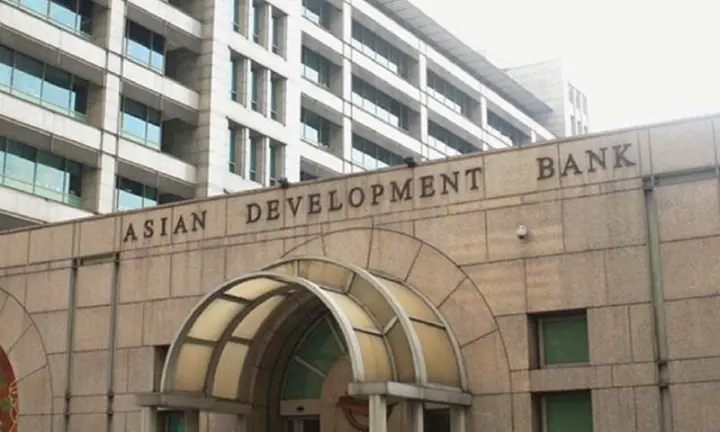
Banking News – The Asian Development Bank (ADB) has signed two Public-Private Partnership (PPP) Transaction Advisory Service (TAS) agreements with the Government of Nepal to facilitate private sector investment in electricity transmission and battery storage PPP projects. This is ADB’s first such agreement in Nepal. The agreement was signed by Arnaud Cauchois, ADB Country Director for Nepal, and Dirghayu Kumar Shrestha, Managing Director of Nepal Electricity Authority (NEA).
“Nepal has made remarkable progress in expanding electricity access to the people, with electricity access rising from 58 percent in 2016 to 99 percent in 2025,” said Cauchois. “The challenge now is to transform this progress into reliable domestic supply and sustainable export capacity. Achieving this requires timely expansion of transmission and battery storage infrastructure, in which private sector participation is crucial to mobilize the capital, expertise, and efficiency needed to complete these investments at a large scale.”
These two agreements are ADB’s first transaction advisory service agreements for an electricity transmission PPP and a single utility-scale battery energy storage system PPP in ADB member countries. Under the agreements, ADB will support NEA in feasibility studies, preparation of project agreements, procurement, tendering, and capacity development. These projects are expected to mobilize more than $200 million USD in private sector investment.
“We appreciate ADB’s partnership through these transaction advisory service agreements, which will help advance strategically important transmission line projects and battery energy storage systems, attract private sector investment, and support the long-term growth and sustainability of Nepal’s energy sector,” said Shrestha.
The first agreement will support the design, financial arrangement, construction, operation, and maintenance of an approximately 134-kilometer-long, 400 kV transmission line in the Tingla-New Khimti-Dhalkebar section. This project is expected to enhance grid reliability, facilitate greater integration of renewable energy, and support regional electricity trade.
Under the second agreement, the design, financial arrangement, installation, and operation of 100-150 MWh utility-scale, multi-site Battery Energy Storage Systems (BESS) will be carried out at NEA-selected substations under the PPP model. BESS will provide grid management and ancillary services to address grid pressure during peak demand, facilitate integration of variable renewable energy, and enhance system stability and reliability.


 About Us
Comment