
Banking News — Manoj Gyawali, Chief Executive Officer of Nabil Bank, has said that Nepal’s banking sector is fully prepared to introduce new financial products within days of customer demand, stressing that the current challenge is not the availability of banking services but the lack of market demand and business confidence.
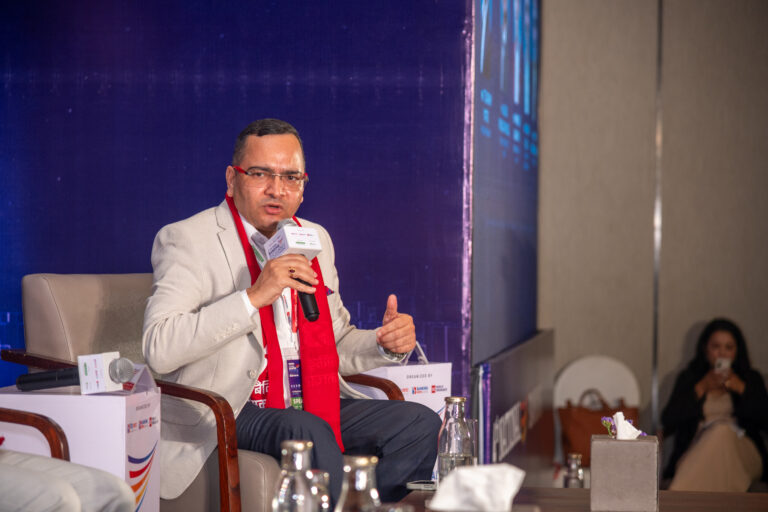
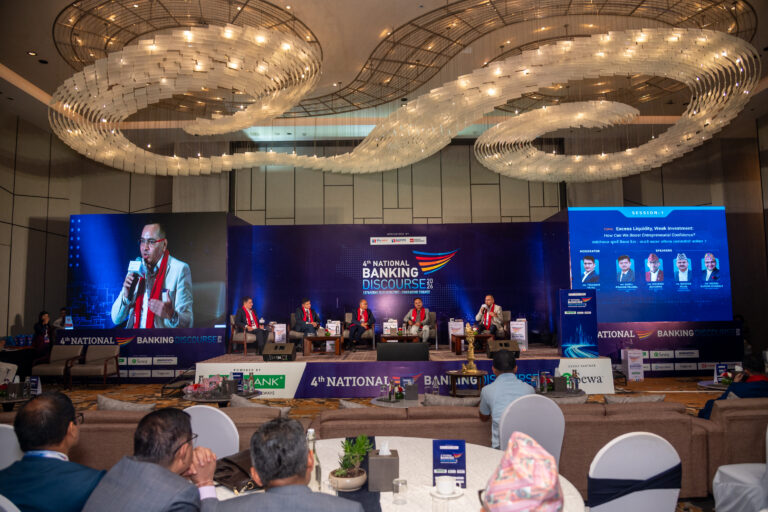
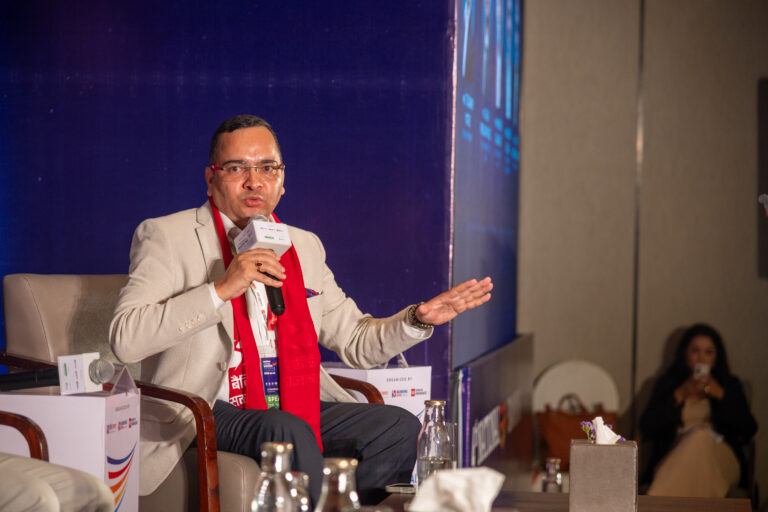
Speaking during the first session of the National Banking Discourse 2026, titled “How Long Will Money Remain Idle in Banks? Restoring Business Confidence,” Gyawali said Nepal currently enjoys historically low interest rates and abundant liquidity, yet credit demand remains weak due to broader economic challenges.
He noted that while high lending rates were previously blamed for slowing credit expansion, loan demand has remained subdued even after interest rates fell to single digits.
“Interest rates account for only about five to seven percent of the overall problem. The remaining 90 percent lies elsewhere in the economy,” Gyawali said.
According to him, Nepal’s banking system has made remarkable progress over the past two decades, particularly in regulation, innovation, and digital financial services. He highlighted Nepal’s achievements in QR code payments, digital payment systems, and financial inclusion, describing the country as one of South Asia’s leading innovators in payment technology.
Gyawali rejected claims that banks have failed to innovate, noting that the sector has continuously introduced new products and digital services. However, he said the main challenge is creating customer demand in an economy where consumption has weakened significantly.
Despite receiving Rs 257 billion in remittances in the month of Baisakh alone, much of Nepal’s productive workforce remains abroad, limiting domestic economic activity. At the same time, insufficient government investment in infrastructure has slowed industries such as cement and steel, reducing employment opportunities and weakening consumer spending.
“We have the products, the services, and more than Rs 1 trillion in excess liquidity,” Gyawali said. “If customers ask for a new product or service, banks are ready to launch it within two days.”
He stressed, however, that banks alone cannot create a favorable business environment.
“Building roads, ensuring reliable electricity, and creating investment-friendly infrastructure are not the responsibilities of banks,” he said. “Once the government creates an environment of confidence and economic activity, the banking sector is fully prepared to provide every financial service required.”
Gyawali identified declining consumption and rising outward migration as the principal reasons behind weak credit demand. With fewer entrepreneurs investing in Nepal and both the public and private sectors adopting a cautious “wait-and-see” approach, market confidence has remained subdued.
He also expressed concern over the uncertainty faced by business leaders and bankers due to legal actions and frequent arrests.
“There is fear over who might be arrested next sometimes bank CEOs, sometimes entrepreneurs,” he said. “If someone has truly committed a crime, the courts should uphold the case. But if they are later released, questions naturally arise about whether proper investigations were conducted before the arrests.”
Gyawali argued that economic offences should be treated separately from criminal offences. Rather than relying primarily on arrests, he suggested imposing substantial financial penalties on those responsible for financial misconduct, which would both deter wrongdoing and generate government revenue.
He warned that public perception often assumes guilt immediately after an arrest, creating unnecessary pressure on business leaders and weakening confidence within the banking sector.
Calling for stronger market confidence, Gyawali said that if the private sector regained trust in government policies, entrepreneurs would rapidly expand their businesses, and many Nepalis working abroad might even consider returning home to invest.
“The banking sector alone cannot create that foundation,” he said. “The government must establish a stable and predictable policy environment.”
Gyawali also urged banks to improve their own practices. With limited loan demand, banks have increasingly competed for each other’s customers, sometimes offering loans below their own base rates. He said the industry must move beyond short-term competition and focus on long-term economic development.
He emphasized the importance of stable interest rates, stronger loan monitoring, and ensuring that borrowed funds are used for their intended purposes.
“If loans had consistently been utilized for the purposes for which they were approved, today’s financial challenges would have been far less severe,” he noted.
Gyawali further encouraged entrepreneurs to use borrowed capital responsibly rather than diverting working capital loans into unrelated investments. He acknowledged that while many genuine business owners deserve greater support from both the government and banks, transparency and ethical business practices are equally essential.
He also called on regulators to maintain policy consistency, warning that frequent regulatory changes undermine investor confidence and discourage private-sector investment.
According to Gyawali, the government should focus on three immediate priorities: accelerating capital expenditure to stimulate demand, encouraging greater private-sector participation in infrastructure development, and creating a more attractive environment for foreign direct investment. He also urged Nepal Rastra Bank to align its upcoming monetary policy with these objectives.
Concluding his remarks, Gyawali expressed confidence in the resilience of Nepal’s banking system despite rising non-performing loans (NPLs).
He noted that the banking sector’s average NPL ratio currently stands at around 4.6 percent, which remains manageable compared with neighboring countries. Bangladesh’s NPL ratio exceeds 20 percent, Sri Lanka’s is around 15 percent, while India’s has improved significantly from 11 percent in previous years to around 2 percent.
“After India and Bhutan, Nepal has one of the healthiest banking systems in South Asia in terms of non-performing loans,” he said. “Depositors’ money is safe, and our banking sector has sufficient capacity to absorb the current level of stressed assets.”

 About Us
Comment