
Banking News– Development banks in Nepal need policy reforms and a more supportive regulatory framework to preserve their relevance and sustainability amid increasing competition from commercial banks, according to Sudip Acharya, Chairman of Kamana Sewa Development Bank.

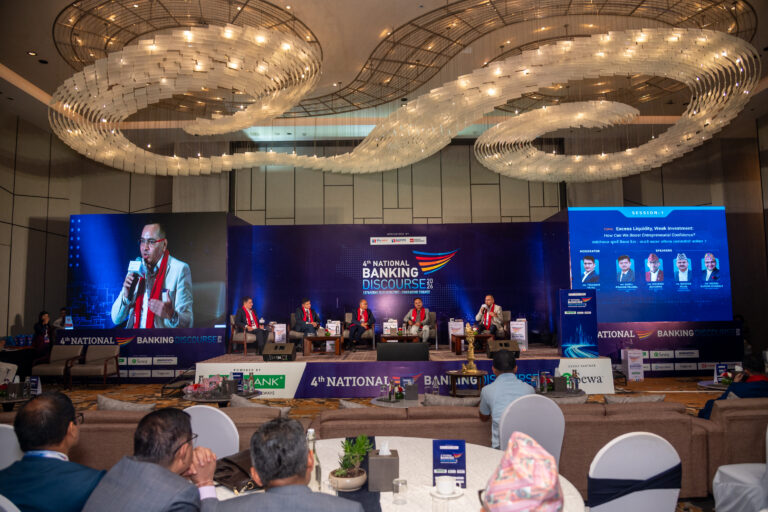
Speaking during the third session of the National Banking Discourse 2026, titled “Sustainability of Development Banks: Contribution, Competition and Policy,” Acharya said Nepal Rastra Bank’s regulatory approach has significantly influenced the development banking sector, but greater flexibility is now needed to encourage innovation.
He said development banks have repeatedly demonstrated their ability to introduce new financial technologies. Citing Kamana Sewa Development Bank as an example, Acharya noted that the bank introduced QR code-based cash withdrawal services before commercial banks adopted similar technology.

According to him, development banks possess several competitive strengths, including operational agility, technology-friendly services and closer relationships with customers. However, he said commercial banks are increasingly entering the same market segments, raising concerns about the long-term identity and role of development banks.
Acharya recalled that similar concerns emerged during the banking sector’s merger and acquisition phase, when the number of development banks declined from 91 to just 17 after several institutions merged into commercial banks. Although development banks have continued to operate successfully, he warned that their future could become increasingly uncertain if the current policy framework remains unchanged.
He emphasized that Nepal’s 17 development banks are not homogeneous, as they include both regional and national-level institutions with different operational realities. Therefore, he argued that regulators should formulate differentiated policies allowing development banks to specialize in sectors where they have comparative advantages and greater expertise.
Acharya further stated that if policymakers intend to preserve development banks within Nepal’s financial system, they must address the policy concerns consistently raised by the sector. Without meaningful regulatory reforms, he cautioned, development banks could face growing challenges in maintaining their competitiveness and long-term sustainability.
His remarks were made during the National Banking Discourse 2026, where banking leaders and policymakers discussed the future direction of Nepal’s development banking sector.

 About Us
Comment