
Banking News– Despite growing investment in Nepal’s agricultural sector, the commercialization and marketing of agricultural products have failed to keep pace, limiting the sector’s overall growth and sustainability, according to Rastriya Banijya Bank (RBB) Chief Executive Officer Devendra Raman Khanal.
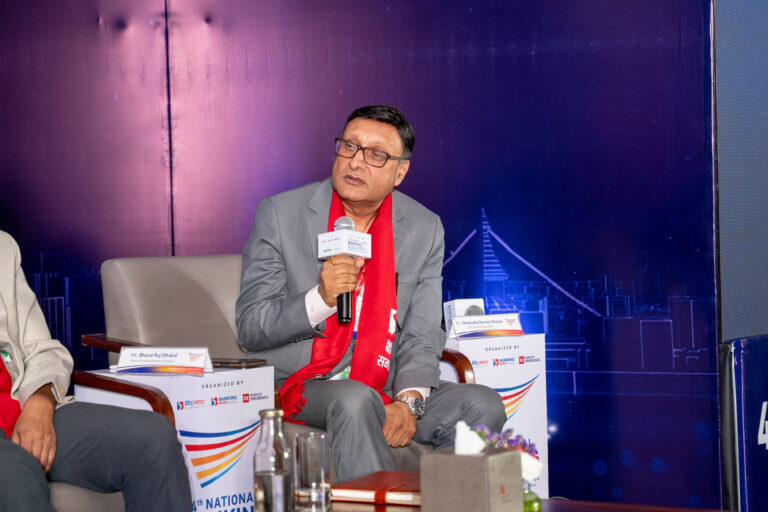
Speaking during the second session of the National Banking Discourse 2026, titled “Expanding Investment in Agriculture: The Role of Banks, Government and the Private Sector,” Khanal said agriculture remains the backbone of Nepal’s economy and prosperity, but persistent structural challenges continue to hinder its development.
He pointed to a significant shortage of human resources in agriculture, noting that most people showing interest in farming are above the age of 50, while younger generations remain largely disengaged from the sector. According to Khanal, negative social perceptions have discouraged educated youth from pursuing agriculture as a professional career.
“Agriculture is still viewed as an occupation for those with limited opportunities rather than a respectable profession,” he said, adding that changing this mindset is essential for the sector’s long-term growth.
Khanal said Rastriya Banijya Bank has made agriculture one of its lending priorities, supported by its extensive nationwide branch network. The bank has been providing concessional loans to small farmers, offering agricultural loans of up to Rs. 1 million at an interest rate of just 4.47 percent without charging any service fees.

However, he acknowledged that agricultural lending continues to carry significant risks. Nepal’s heavy dependence on rain-fed farming, inadequate irrigation infrastructure, limited market access and weak supply chains expose farmers to high levels of uncertainty. He added that middlemen and inefficient market systems often prevent farmers from receiving fair prices for their produce, increasing the risk of loan defaults.
Khanal also emphasized that commercial farming alone cannot generate sufficient employment opportunities. He said the country must encourage and empower smallholder farmers at the grassroots level to create sustainable rural employment and strengthen agricultural productivity.
He further stressed that successful agricultural development requires proper business planning and market-oriented production. While local government representatives frequently approach banks seeking agricultural financing, many lack concrete business plans or commercially viable project frameworks, making sustainable investment difficult.

According to Khanal, Nepal must first elevate the social status of farmers and recognize agriculture as a respected profession. Without changing societal attitudes, he warned, neither government policies nor increased banking investment alone will be enough to transform the sector.
“Although investment in agriculture has increased significantly, commercialization and market development have not progressed at the same pace,” Khanal said, adding that improving market management alongside production is essential to ensure better returns for farmers and long-term growth of Nepal’s agricultural sector.
His remarks were delivered during the National Banking Discourse 2026, where policymakers, bankers and private sector representatives discussed strategies to strengthen agricultural financing and rural economic development.

 About Us
Comment