
Banking News – The government has removed a major hurdle to the construction of the Dhalkebar–Hetauda 400kV transmission line, a national power infrastructure project that had been stalled for 12 years due to various administrative and regulatory issues.
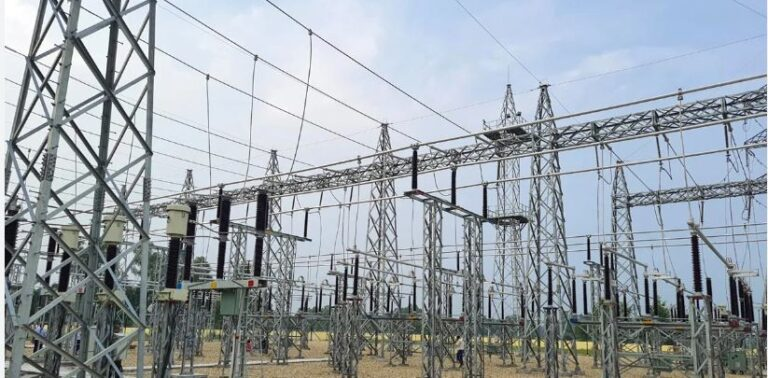
Following a Cabinet decision on Wednesday, the Nepal Electricity Authority (NEA) has received approval to use 2.2 hectares of national forest land in the Makwanpur section of the project. The approval covers forest areas managed by the Ratomate Community Forest Users Group in Hetauda-15 and the Saraswati Community Forest Users Group in Bakaiya-2. The Cabinet also authorized the removal of 1,292 trees of various species required for the project.
According to the Ministry of Energy, Water Resources and Irrigation, the project had remained on hold for years due to delays in securing forest clearance, right-of-way approvals, and permission for tree felling.
The Dhalkebar–Hetauda–Inaruwa transmission corridor, spanning approximately 300 kilometers, requires a 46-meter-wide right-of-way for the 400kV high-voltage transmission line, making forest approval a critical requirement.
Officials said the 220kV transmission circuit between Hetauda and Butwal has already been completed. Once the new 400kV line becomes operational, it is expected to strengthen east-west electricity transmission, improve the reliability of Nepal’s national grid, reduce frequent power interruptions and system tripping, and facilitate increased electricity exports to India.
Acting Managing Director of the Nepal Electricity Authority, Dirghayu Kumar Shrestha, said the transmission line will make Nepal’s national transmission system stronger, more balanced, and more reliable by enabling electricity generated in the eastern region to be efficiently supplied to the west, and vice versa.
Meanwhile, Minister for Energy, Water Resources and Irrigation Biraj Bhakta Shrestha described the project as an “energy highway,” saying it will significantly enhance Nepal’s electricity export capacity. He noted that while the country currently has the capacity to export around 1,000 megawatts of electricity, the fully operational transmission system could increase export capacity to between 2,500 and 3,000 megawatts.

 About Us
Comment