
Banking News – The government has registered a bill in Parliament proposing the repeal of four Acts and one regulation related to the economic sector. The “Bill to Amend and Repeal Certain Nepal Laws Related to Finance, 2083”, registered in the House of Representatives on Asar 23, aims to eliminate legal complexities and duplication, align laws with the Constitution and the federal governance system, make revenue administration more technology-friendly, and improve public service delivery.
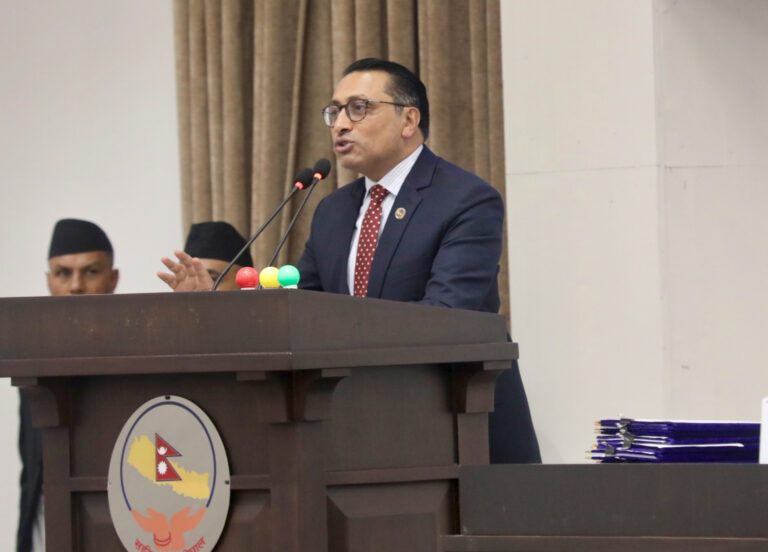
According to the Ministry of Finance, the bill has been introduced to remove legal and institutional provisions that are inconsistent with the spirit of the Constitution or have become irrelevant under the current federal governance structure. It also seeks to eliminate legal duplication and ensure more effective public service delivery with reduced time and cost.
The bill proposes the repeal of the Regional Development Plans (Implementation) Act, 2013, Nepali Currency Circulation Promotion Act, 2014, Income Ticket Duty Act, 2019, Revenue Leakage (Investigation and Control) Act, 2052, Financial Intermediary Institutions Act, 2055, and the Revenue Leakage (Investigation and Control) Regulations, 2070. It also proposes amendments to the Value Added Tax (VAT) Act, 2052, Income Tax Act, 2058, and the Customs Act, 2082.
The proposed amendments to the VAT Act, 2052 require vehicles transporting goods for commercial purposes to be integrated into a web-based online cargo vehicle monitoring system. Under the proposed provision, all commercial goods transported by legally registered transport vehicles must be entered into the online monitoring system before transportation.
The bill also proposes that all transport vehicles registered in Nepal be equipped with a functional GPS tracking device that meets prescribed standards, and that the device’s serial number be registered with the relevant authority. However, transport vehicles operating in designated areas may be exempted from the GPS requirement.
Under the proposed provisions, tax officers may impose a fine of up to Rs 50,000 for a first offence and up to Rs 100,000 for each subsequent offence on transport vehicle owners or users who fail to enter required information into the online system, carry necessary documents, or comply with GPS installation requirements.
The bill also proposes significant amendments to the Income Tax Act, 2058 by introducing a new definition of “non-tax revenue.” Under the proposal, non-tax revenue includes fees, charges, service fees, royalties, dividends, fines, principal repayments, and the interest charged on such amounts under prevailing laws.
In addition, the bill proposes a new Section 72(A) in the Income Tax Act, allowing the government, under the direction of the Government of Nepal, to investigate, determine, and collect unpaid non-tax revenue. If an investigation finds additional non-tax liabilities, the bill proposes imposing a 100 percent penalty on the outstanding amount.
The government expects that, once passed and implemented, the bill will expand the use of information technology in revenue administration, enable real-time monitoring of cargo transportation, strengthen the collection of non-tax revenue, and modernize Nepal’s legal framework by removing outdated and irrelevant laws in line with the federal governance system.

 About Us
Comment