
Kathmandu – Manish Jha, a lawmaker from the ruling National Independent Party (RSP), has said that while the government’s recent crackdowns are misguided, the private sector must also undertake reforms.
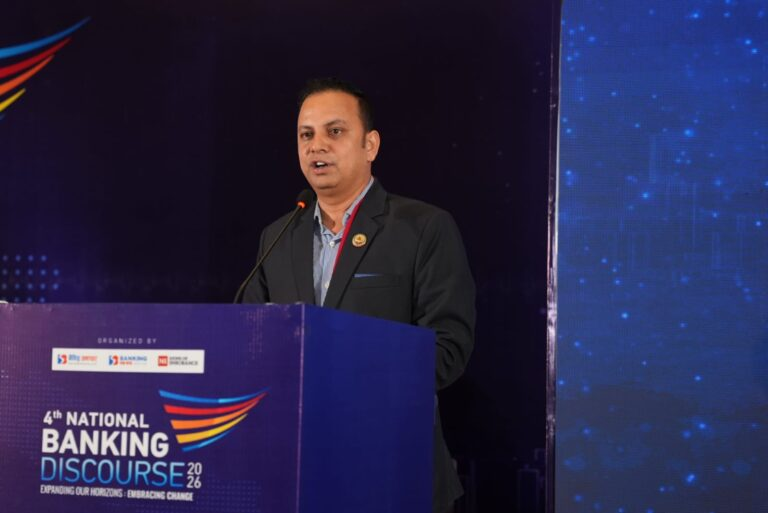
Addressing the Fourth Banking Discourse 2026, jointly organized by Banking Samachar and Banking News, Jha said both the state and the private sector share responsibility for improving Nepal’s economic and banking environment.
“I am an entrepreneur myself and have gained some experience as a policymaker. There is no shortage of liquidity in banks; there is a shortage of confidence among investors,” Jha said. “There are shortcomings on both sides. Crackdowns are certainly taking place, but reforms are necessary for both parties. Is the government alone at fault? Perhaps 80 percent of the problem lies with the state, but there are issues within the private sector as well.”
He added that acting against businesses without first listening to their concerns is wrong, but stressed that banking practices also require improvements.
Jha described banking as one of the world’s most respected professions and noted that banking practices predate the invention of money itself. Highlighting the evolution of Nepal’s financial sector, he said the country must continue to embrace digital transformation.
“Alpine Travel introduced Nepal’s first ATM card in the 1980s, while mobile banking has been around for just over two decades. Yet nearly 29.7 million mobile banking accounts have already been created. This demonstrates the pace at which Nepal is moving toward a digital economy,” he said.
The lawmaker also called for greater gender inclusiveness in leadership positions within the banking sector and urged organizers to ensure better representation of women in future editions of the discourse.
Drawing on his experience as an entrepreneur and founder of the research firm Tax Nepal, Jha said that entrepreneurship and economic growth depend on access to skills, resources, and markets. These same principles, he noted, should guide lending and investment decisions.
He acknowledged concerns surrounding economic slowdown but emphasized that the problem is not a lack of money in the banking system. “The real crisis is one of confidence confidence in where, how, and under what conditions investments should be made,” he said.
According to Jha, some unnecessary barriers have been created, and stakeholders need to become more united and understanding. “If 80 percent of the shortcomings lie with the state, then the remaining 20 percent must belong somewhere else. We must identify and correct those mistakes as well,” he said.
Using an analogy, Jha remarked, “If a priest becomes corrupt, the temple itself cannot be blamed. Similarly, banks and their brands are not inherently flawed, but certain banking practices require reform.”
Speaking on behalf of the ruling establishment, he said he was prepared to accept the state’s share of responsibility. “Instead of listening, the government has sometimes resorted directly to punitive measures, which I consider wrong even as an entrepreneur. But who will take responsibility for the remaining 20 percent? There can be no progress without reforms on both sides,” he said.
Referring to international examples, Jha cited reforms in Turkey, India, Malaysia, and Saudi Arabia, saying meaningful transformation occurs only when both the state and the private sector evolve together.
He underscored the need for discipline, goodwill, and continuous dialogue between the government and businesses, describing the banking sector as the strongest pillar of Nepal’s private sector.
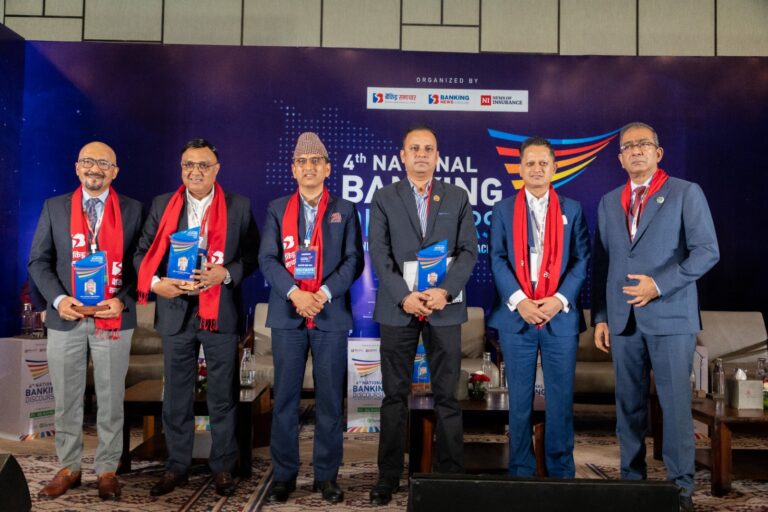
Congratulating the organizers, Jha praised the continuity of the Banking Discourse and highlighted its role in fostering knowledge and understanding. He also thanked CBFIN General Secretary Manoj Kumar Goyal for simplifying the national budget through social media posts, saying such efforts strengthen collaboration and contribute to national development.
“I am grateful to the organizers and all stakeholders for inviting me and patiently listening to my views,” Jha said.

 About Us
Comment