
Banking News — Nepal needs to establish an Integrated Agricultural Development Authority to strengthen agricultural financing, improve market infrastructure, and prevent the misuse of agricultural loans, according to Dhakal, Director of Muktinath Krishi Company.
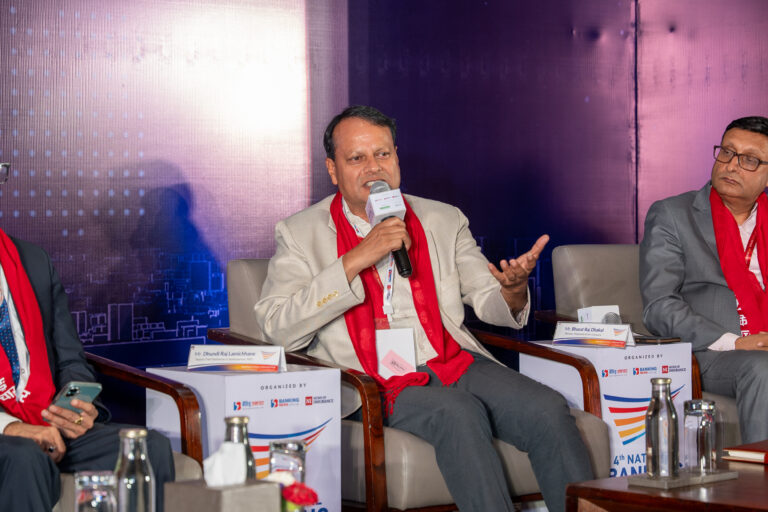
Speaking during the second session of the National Banking Discourse 2026, titled “Expanding Investment in Agriculture: The Role of Banks, Government and the Private Sector,” Dhakal said that despite abundant liquidity in the banking system, investment in agriculture has remained below expectations due to structural weaknesses across the sector.
He noted that the government introduced a 5 percent interest subsidy on agricultural loans, while Nepal Rastra Bank (NRB) made it mandatory for banks to allocate at least 15 percent of their total lending portfolio to the agricultural sector. Banks that failed to meet the threshold were even subject to regulatory action.
According to Dhakal, these policies encouraged many businesspeople with little or no agricultural experience to acquire land and seek subsidized agricultural loans.
“However, the banking system has still failed to reach genuine farmers,” he said. “There is no effective mechanism to ensure that agricultural credit reaches the intended beneficiaries.”
He claimed that if Nepal Rastra Bank conducted comprehensive monitoring of concessional agricultural loans, it would find that more than 75 percent had been misused. Regulatory oversight only intensified after the issue received public attention through media reports.
Dhakal explained that many borrowers viewed agricultural loans primarily as an opportunity to acquire assets rather than invest in farming. As property prices later declined, these borrowers struggled to repay their loans, contributing to the recent rise in non-performing loans (NPLs).
“Agriculture is a science- and technology-based industry,” he said. “Without proper systems for production, processing, and marketing, sustainable agricultural investment is extremely difficult.”
He warned that widespread misuse of agricultural loans has made many bank employees reluctant to finance the sector, despite its long-term potential.
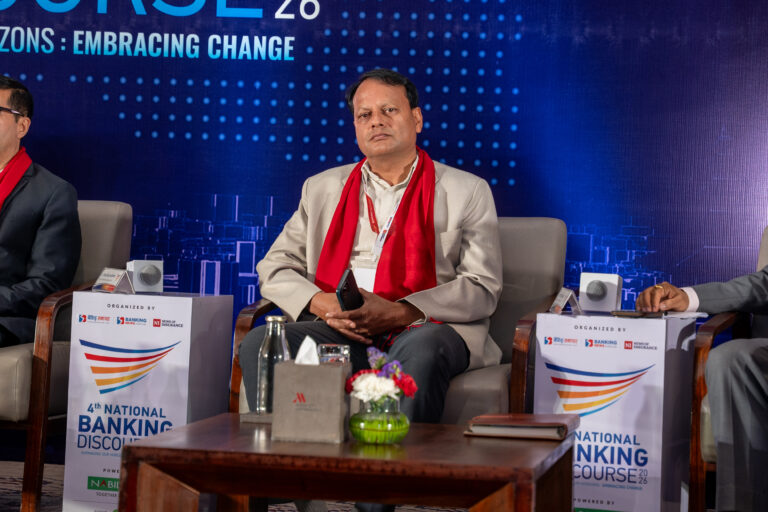
Reflecting on Muktinath Development Bank’s experience, Dhakal said the bank had previously achieved encouraging results by providing small agricultural loans directly to rural farmers. Those borrowers used the funds productively, increased agricultural output, and repaid their loans on time, resulting in minimal loan defaults.
However, he acknowledged that structural challenges remain.
“We still lack mechanisms to supply farmers with quality inputs and, more importantly, we cannot guarantee markets for their produce after harvest,” he said.
He identified the absence of organized wholesale agricultural markets as one of Nepal’s biggest barriers to agricultural development. Without reliable markets, industries cannot develop, and farmers have little incentive to expand production.
Dhakal called for stronger collaboration among local governments, farmers, and the private sector to improve productivity and address issues such as land management and agricultural commercialization.
He observed that Nepal is currently in a favorable position to expand agricultural production. Compared with three decades ago, rural infrastructure has improved significantly, and substantial areas of cultivable land now remain unused.
According to him, these fallow lands could be leased under contract farming arrangements, allowing large-scale commercial agriculture to flourish.
He also suggested reconsidering the traditional cooperative model. Instead of focusing primarily on savings and credit activities, cooperatives could facilitate land leasing, while larger private companies take responsibility for processing, marketing, and exporting agricultural products.

“Our climate, soil, water resources, labor force, and agricultural potential are all strong,” he said. “What we lack is an integrated institutional structure that connects farmers with markets.”
Drawing a comparison with the banking sector, Dhakal said banks successfully act as intermediaries between depositors and borrowers. Similarly, Nepal needs a strong private-sector mechanism that connects farmers with consumers through efficient value chains.
To achieve this, he urged the government to enact a comprehensive Agricultural Market Act, strengthen market management systems, and establish an Integrated Agricultural Development Authority capable of coordinating production, financing, marketing, and private-sector investment.
He concluded that guaranteeing market access for farmers and creating a well-coordinated agricultural ecosystem would encourage greater investment, improve loan utilization, and unlock the long-term potential of Nepal’s agricultural sector.

 About Us
Comment