
Banking News — Ujjwal Gautam, Treasurer of the Federation of Contractors’ Associations of Nepal (FCAN), has urged Nepal Rastra Bank (NRB) to include the construction sector under its directed lending policy while formulating the Monetary Policy for Fiscal Year 2083/84 (2026/27).
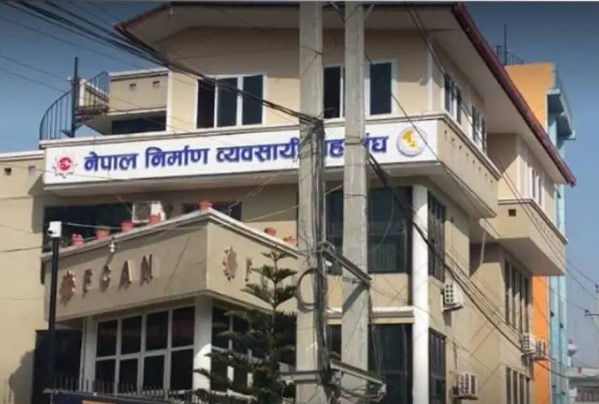
Presenting recommendations to the central bank, Gautam argued that actual market prices have increased by more than 75 percent, despite official inflation figures remaining significantly lower.
He cited examples such as the price of a product that previously cost Rs. 75 per kilogram rising to Rs. 186, while the price of diesel has increased from Rs. 133 per litre to Rs. 237, illustrating what he described as the true extent of inflation.
According to Gautam, Nepal Rastra Bank’s inflation index reflects only a 2.38 percent increase, which he said does not accurately represent market realities.
“When market prices have increased by around 75 to 78 percent, the central bank’s index shows only a 2.38 percent rise. The monetary policy should adopt a separate index that better reflects the actual costs faced by the construction sector,” he said.
He also called for the introduction of directed lending quotas for the construction industry, similar to those currently available for the agriculture and hydropower sectors.
Gautam suggested allocating 10 to 15 percent of banks’ lending portfolios specifically to construction projects.
He noted that contractors often struggle to provide sufficient collateral for large infrastructure projects, forcing them to invest in land rather than project execution because banks generally require fixed assets as collateral before extending loans.
“In projects worth Rs. 3 billion or Rs. 4 billion, contractors are required to provide substantial guarantees. Since banks do not provide loans without adequate collateral, contractors are compelled to purchase land instead of focusing on project implementation,” he said.
According to Gautam, government infrastructure projects themselves should be recognized as credible security for project financing, and loan facilities for such projects should therefore be made more accessible.
He further stressed that construction materials should be measured under a separate price index to better reflect inflation in the sector.
Gautam also urged Nepal Rastra Bank to allow loan restructuring and rescheduling for construction companies that have been unable to repay loan principal and interest installments over the past four years.
In addition, he warned that placing all contractors involved in cheque bounce cases on the banking blacklist could severely disrupt Nepal’s construction industry, which accounts for a significant share of the country’s capital expenditure.

 About Us
Comment