
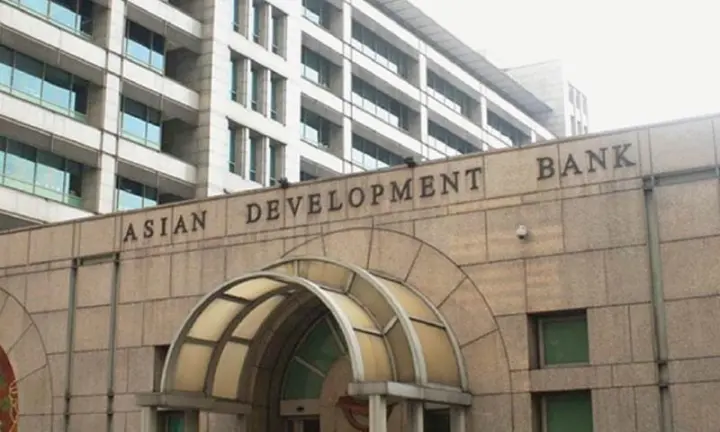
Banking News – The Asian Development Bank (ADB) has projected Nepal’s economy to grow by 3.9% in 2026, citing improved performance in the hydropower sector and a gradual recovery in industrial activity. Despite the upward revision, the forecast remains significantly below the government’s target of 7% economic growth for the upcoming fiscal year.
According to the ADB’s latest outlook, Nepal’s economy is expected to expand from 4.4% in 2025 to 4.5% in 2027. However, the bank warned that ongoing conflict in the Middle East could negatively affect Nepal’s economy by reducing tourist arrivals and limiting opportunities for foreign employment, potentially slowing growth in 2027.
The report noted that the government’s target of 6% growth for the current fiscal year is also unlikely to be achieved, with the revised estimate standing at 3.85%.
On inflation, the ADB offered a more positive outlook, forecasting that consumer price inflation will decline to 3.2% in 2026, supported by improved agricultural production and food supply. However, inflation is expected to rise again to 5% in 2027 due to higher fuel prices, increased government spending, and stronger domestic demand.
The report also highlighted that broader economic growth across Asia and the Pacific is likely to moderate in the coming year because of global economic uncertainty, persistent inflation, and continued disruptions to international supply chains.
Among South Asian economies, India is projected to record the strongest growth in 2026, with an estimated 6.6% expansion. Pakistan’s economy is forecast to grow by 3.7% in both 2026 and 2027, constrained by high energy costs and pressure on remittance inflows.
The ADB also noted that Sri Lanka and Maldives are expected to face continued economic challenges due to external sector pressures and rising fuel prices, which may weigh on their growth prospects.

 About Us
Comment