
Banking News – Rastriya Banijya Bank Limited (RBBL), Nepal’s largest state-owned commercial bank by government transactions, has reported strong financial performance over the past five years, driven by significant growth in business operations, deposits, market share, and customer service.
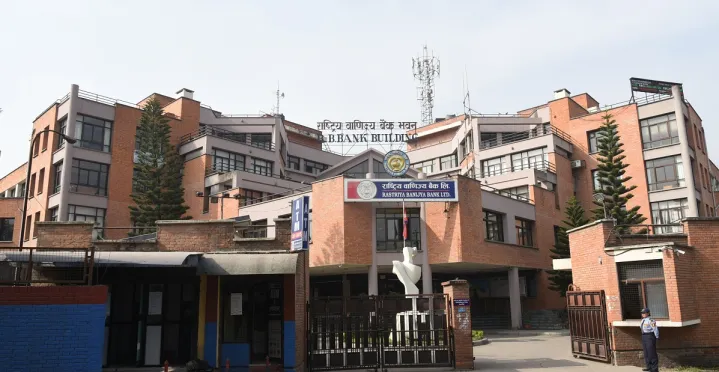
Despite a challenging economic environment, the bank has continued to strengthen its financial position by prioritizing financial discipline, responsible banking practices, and effective risk management, according to Chief Executive Officer Devendra Raman Khanal.
Khanal said the bank’s total deposits increased from NPR 503 billion in the previous fiscal year to NPR 626 billion as of the current fiscal year, representing an increase of approximately NPR 123 billion, or around 24 percent year-on-year.
The bank’s share of the country’s total banking deposits has also risen to 7.59 percent.
As of the end of the third quarter of the current fiscal year, RBBL had extended NPR 339 billion in loans. Khanal noted that the bank’s share of the national banking sector’s loan portfolio increased from 4.81 percent in FY 2021/22 to 5.74 percent by the end of the third quarter of FY 2025/26, reflecting continued expansion in its lending business.
Despite sluggish credit demand across Nepal’s banking industry, the bank outperformed the sector by achieving 13.26 percent annual loan growth through the third quarter, reaching a total loan portfolio of NPR 339 billion.
By comparison, Nepal’s commercial banking sector recorded total lending of NPR 5.251 trillion, with annual loan growth of 7.43 percent, equivalent to NPR 277 billion, during the same period.
The bank also reported improvements in shareholder value. As of the end of the third quarter, its book value per share had risen to NPR 351.98, while earnings per share (EPS) reached NPR 23.55.
RBBL posted a net profit of NPR 2.76 billion by the end of the third quarter, supported by continued efforts to modernize its products and deliver customer-focused banking services.
The bank has also maintained a healthier asset quality than the industry average. While the overall non-performing loan (NPL) ratio in Nepal’s banking sector stood at 5.25 percent, RBBL’s NPL ratio was 4.48 percent.
CEO Khanal said the bank remains committed to further reducing bad loans through strategic planning and proactive credit risk management.
RBBL currently operates 316 branch offices across all 77 districts and seven provinces, along with 334 ATMs, more than 147,000 QR merchants, and 2.062 million mobile banking users, serving approximately 4.87 million customers nationwide.
Despite ongoing challenges such as weak credit demand and broader pressures in the banking sector, the bank’s institutional strength was reaffirmed after CARE Ratings Nepal maintained its ‘A+’ credit rating. RBBL has also received national recognition as the commercial bank with the highest volume of QR merchant transactions in Nepal.

 About Us
Comment