
Banking News – Nepal and India have agreed on a series of major initiatives to strengthen bilateral energy cooperation, including increasing Nepal’s electricity export capacity to India to 1,650 megawatts (MW) and accelerating the development of cross-border transmission infrastructure.
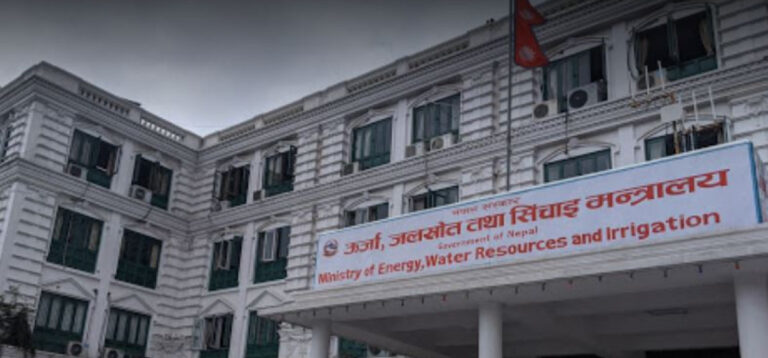
Minister for Energy, Water Resources and Irrigation Biraj Bhakta Shrestha said the 13th Nepal–India Joint Steering Committee (JSC) Meeting, held in Pokhara, marked a significant milestone in Nepal’s long-term goal of exporting 10,000 MW of electricity to India.
The minister said the decisions taken during the meeting would help expand Nepal’s electricity market, boost energy exports, reduce the country’s trade deficit, increase foreign exchange earnings, and strengthen the national economy.
The JSC agreed to enhance bilateral electricity trade by expanding cross-border transmission infrastructure and developing mechanisms for long-term power trading.
Ahead of the meeting, Minister Shrestha held separate courtesy meetings with India’s Power Secretary Pankaj Agarwal and Additional Foreign Secretary Munu Mahawar, emphasizing the need to further strengthen energy cooperation and encourage greater Indian investment in Nepal’s hydropower sector.
He stressed that, alongside increasing electricity generation, both countries should work jointly on expanding transmission infrastructure and electricity markets. The minister also highlighted Nepal’s water resources as not only a source of clean energy but also an important asset for environmental conservation and sustainable development.
The meeting, co-chaired by Nepal’s Energy Secretary Sarita Dawadi and India’s Power Secretary Pankaj Agarwal, agreed to significantly expand cross-border electricity exchange.
According to the Ministry of Energy, the capacity of the existing Dhalkebar–Muzaffarpur 400 kV cross-border transmission line will be increased from the current 1,000 MW to 1,400 MW for electricity imports and 1,650 MW for exports. The decision was based on recommendations from a joint technical study and the Joint Working Group (JWG).
The two sides also agreed to accelerate the implementation of several strategic transmission projects. The Detailed Project Report (DPR) for the Chameliya–Dhauliganga 220 kV double-circuit transmission line has been approved, with construction targeted for completion by December 2028.
In addition, Nepal Electricity Authority and Power Grid Corporation of India will expedite the establishment of a joint venture company to implement the previously signed shareholder agreements for the Inaruwa–New Purnia and Dodhodhara (New Lamki)–Bareilly 400 kV transmission lines.
Looking ahead to the projected increase in electricity exports by 2034–35, the meeting also approved the DPR for the Motihari–Nijgadh 400 kV double-circuit transmission line and endorsed plans to upgrade the Muzaffarpur–Dhalkebar line with higher-capacity conductors to increase power transmission capacity.
Both countries further agreed to complete additional technical studies on the proposed Lucknow–Kohalpur–Lamahi 400 kV transmission line before moving toward implementation.
The meeting also reviewed progress on the New Butwal–Gorakhpur 400 kV cross-border transmission line. Nepal aims to complete its section of the project by August 2026. However, since the New Butwal 400 kV substation is expected to be completed only by December 2027, the line will initially operate at 220 kV under an interim technical arrangement.
During this interim period, Nepal will be able to import up to 130 MW and export up to 200 MW of electricity through the line.
The Joint Steering Committee (JSC) and the Joint Working Group (JWG), established under the Nepal–India Power Trade Agreement, will continue coordinating bilateral electricity trade, transmission infrastructure development, and broader energy cooperation.

 About Us
Comment