
Banking News – Confederation of Nepalese Industries (CNI) President Birendra Raj Pandey has said that although Nepal’s electricity generation has increased significantly, inadequate transmission and distribution infrastructure continues to hamper industrial growth, forcing more than 60 percent of industries to rely on diesel generators.
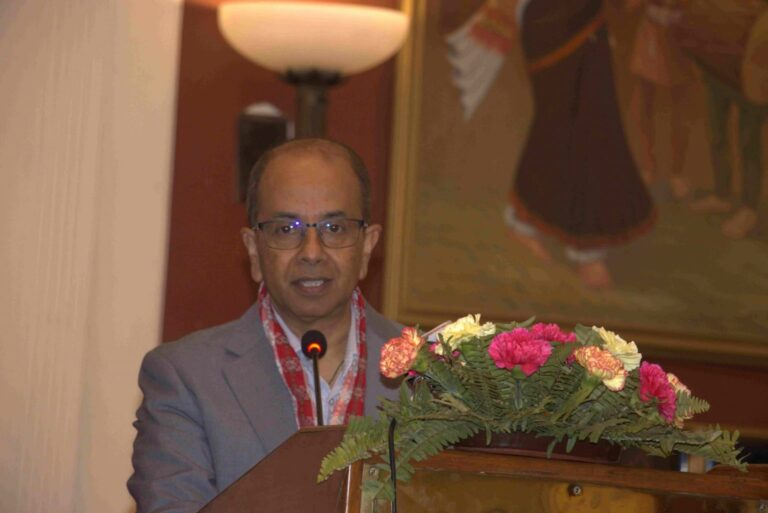
Speaking at the interaction program on “Challenges in Power Infrastructure Development and the Way Forward,” organized by the Nepal Economic Journalists Association (NAFIJ), Pandey said industries across the country are still experiencing power supply disruptions, despite official claims of improved electricity availability.
He noted that Nepal’s hydropower generation has recently reached 3,000 megawatts (MW), with the private sector contributing more than 80 percent of total production. However, he said the lack of adequate transmission and distribution networks continues to undermine the benefits of increased generation.
Citing the CNI Industrial Status Report, Pandey stated:
“More than 60 percent of industries are still forced to use generators. Voltage fluctuations and frequent power tripping in industrial areas have significantly increased production costs.”
He emphasized that electricity is the primary raw material for industry, and sustainable industrialization cannot be achieved without a reliable and high-quality power supply.
Pandey identified delays in transmission line construction as one of the sector’s biggest challenges, pointing to land acquisition issues, forest clearances, and lengthy administrative procedures that often delay projects for years.
“When transmission lines are not completed on time, electricity generated goes to waste, while industries are left without adequate power,” he said.
The CNI president also urged the government to expand private sector participation beyond electricity generation to include power transmission and distribution, arguing that greater private investment would accelerate infrastructure development.
He further called for increased investment in energy storage systems, EV charging stations, and smart grid technologies, saying such initiatives would help Nepal achieve its long-term goal of exporting 10,000 MW of electricity within the next decade.
Pandey stressed that boosting domestic electricity consumption is equally important, noting that using electricity for industrial production within Nepal would contribute significantly to economic growth. He highlighted data centers as a promising sector where Nepal could consume more electricity while exporting digital services.
He also recommended that the government plan transmission lines and substations alongside new hydropower projects rather than after power plants are completed.
According to Pandey, policy stability, faster decision-making, and an investment-friendly environment are essential if Nepal is to establish itself as South Asia’s clean energy hub.
The program was attended by senior government officials, energy entrepreneurs, and other stakeholders from the power sector.

 About Us
Comment