
Banking News – Nepal’s new fiscal budget, introduced by the two-thirds government led by the Rastriya Swatantra Party (RSP), came into effect today, bringing new taxes on education, healthcare, electricity, and ride-sharing services.
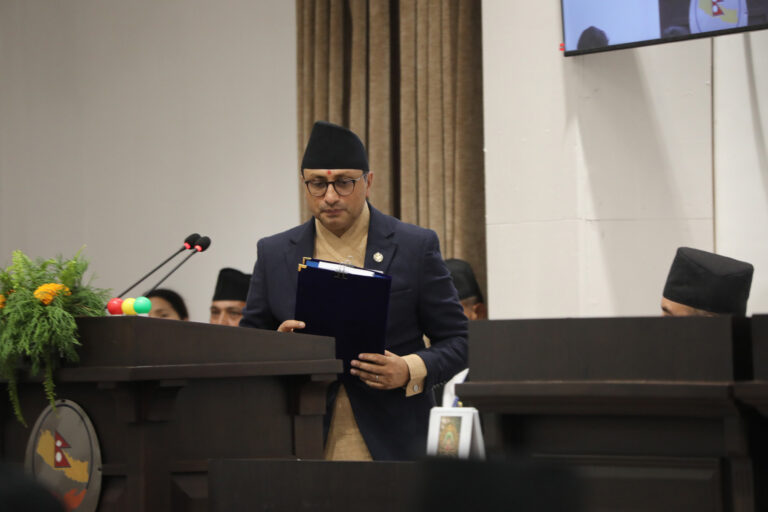
With the implementation of the budget presented by Finance Minister Dr. Swarnim Waglé, consumers will now face additional charges on several essential services.
Under the new provisions, a 3 percent Equity Levy has been imposed on education and healthcare services. According to the government, the revenue generated from the levy will be used to support children from disadvantaged communities in Rukum and Rolpa districts.
However, the measure is expected to increase the financial burden on parents, particularly those whose children study in Kathmandu Valley and other urban areas, as educational institutions begin collecting the additional charge.
The budget has also introduced a 5 percent Value Added Tax (VAT) on electricity consumption exceeding 50 units per month.
As a result, households consuming more than 50 units of electricity each month will now be required to pay 5 percent VAT on their electricity bills.
According to government estimates, around 97 percent of Nepal’s population now has access to electricity, and between 50 and 60 percent of consumers use more than 50 units per month, meaning a large portion of households will be affected by the new tax.
In addition, the government has imposed a 5 percent VAT on ride-sharing services booked through mobile applications.
Nepal currently has around half a dozen ride-sharing platforms, which are used by thousands of commuters every day. The new tax is expected to increase transportation costs for users of these digital services.
The newly implemented tax measures form part of the government’s broader fiscal policy aimed at raising revenue, though they are also expected to increase the cost of living for consumers across multiple sectors.

 About Us
Comment