
Banking News – Nepal’s Ministry of Finance has made prior approval mandatory for the purchase of new four-wheeled vehicles using allocated budget funds, as part of new budget implementation guidelines for the current fiscal year.
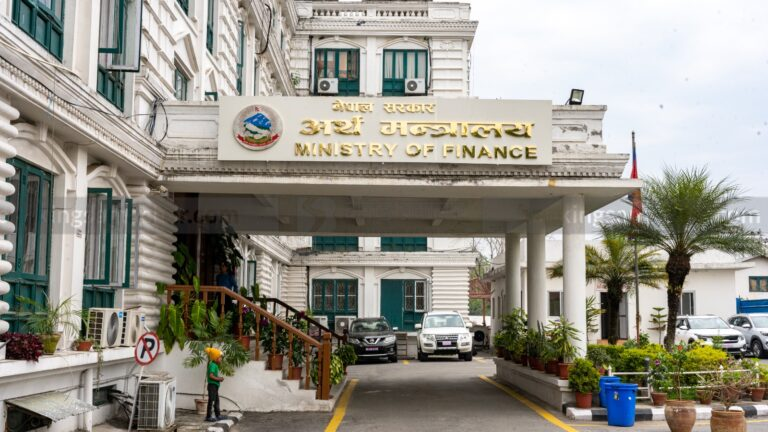
According to the Budget Implementation Guidelines issued by the Ministry on Monday, no government agency will be allowed to purchase a new four-wheeled vehicle without obtaining prior approval from the Ministry of Finance. The guidelines also require advance approval for all official foreign visits funded through the government budget.
The Ministry has further directed that government offices may rent private buildings only when no suitable government-owned buildings are available. In such cases, offices must prioritize renting buildings located outside major commercial areas or principal roads that provide only the minimum required infrastructure and facilities.
Government agencies have also been instructed to prioritize the use of vacant government-owned buildings before considering rented premises. Any rented property must be used exclusively for official government purposes.
The guidelines call for strict fiscal discipline by minimizing administrative expenses, including costs related to electricity, water, telecommunications, office rent, fuel, maintenance, office supplies, allowances, training programs, seminars, service charges, and travel.
To improve public financial management, government agencies are required to prepare monthly cash flow plans and submit them to the Ministry of Finance to ensure efficient utilization of state funds.
The Ministry has also introduced tighter cash management measures. Any government entity expecting to make payments exceeding Rs. 1 billion must notify the Ministry of Finance at least seven days in advance.
Additionally, implementing agencies have been instructed to assess potential fiscal risks associated with projects and programs and adopt appropriate risk mitigation measures during implementation.
According to Finance Secretary Dr. Ghanshyam Upadhyaya, government bodies should strengthen fiscal risk management systems, improve oversight of large infrastructure projects, and accelerate capital expenditure through more effective project implementation.
The guidelines also require ministries and agencies to regularly report budget implementation challenges and their underlying causes to both the National Planning Commission and the Ministry of Finance. A formal review of budget implementation will be conducted by the Ministry every two months.

 About Us
Comment