
Banking News – Researchers from the Advanced College of Engineering and Management have presented an innovative artificial intelligence (AI)-driven solution to address monkey-induced crop damage and escalating human-wildlife conflict (HWC) in Nepal, proposing a scalable technology that could help protect agricultural communities across the country.
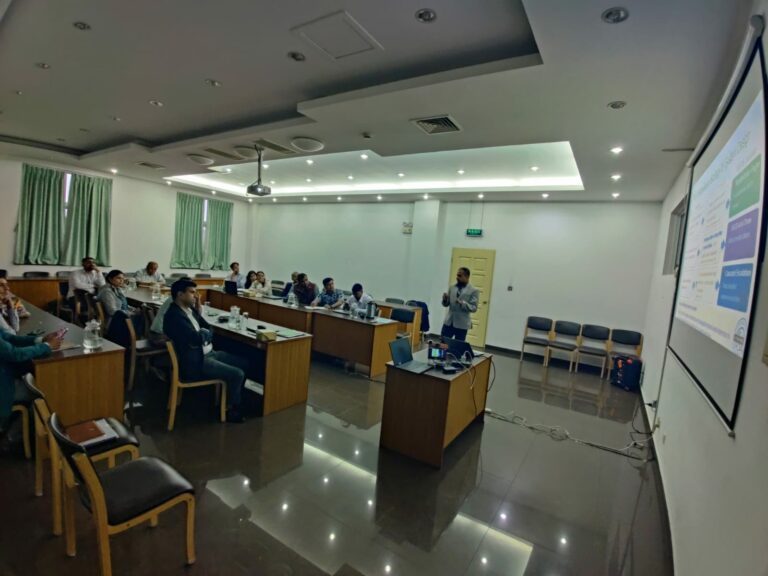
The presentation was delivered on July 6, 2026, at the seminar hall of the National Trust for Nature Conservation in Khumaltar before a government-formed multi-stakeholder task force working on human-wildlife conflict management.
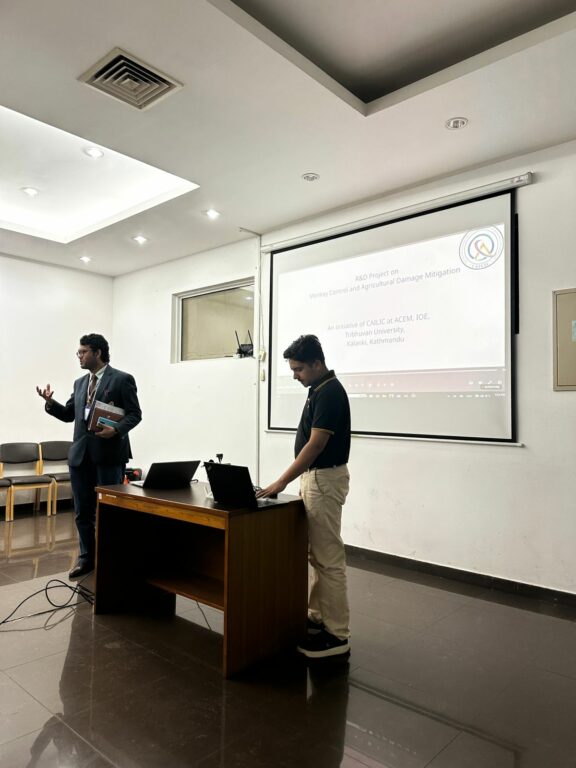
The research project, titled “Randomization of Multi-modal Repellents in Controlling Monkey Riot and Farm Damage Mitigation in Nepali Villages,” is being led by the Center for Academia-Industry Linkages and International Collaboration (CAILIC) at ACEM. The interdisciplinary initiative brings together researchers from ACEM’s Research and Innovation Unit (RIU), AI Center, Electronics and Computer Department, along with academic and industry collaborators.
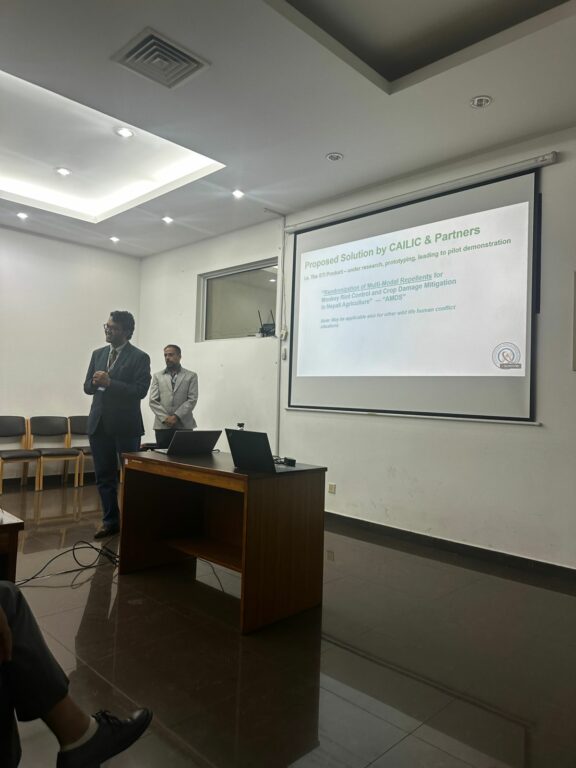
According to the research team, the proposed system combines intelligent multi-modal ground-based and aerial repellent technologies to deter monkeys from damaging farmland. The solution is designed not only for agricultural use but also for industries located near forested areas, including industrial zones such as Balaju, and could potentially be adapted to monitor and manage other forms of wildlife intrusion.
The researchers noted that monkey-related crop destruction has become a nationwide challenge, affecting farming communities from eastern to western Nepal. The issue has increasingly been linked to declining agricultural productivity, economic losses, rural depopulation, and growing human-wildlife conflict. It has also featured prominently in parliamentary discussions, government policy debates, and recent election agendas.
The Government of Nepal has recently established a special task force to address human-wildlife conflict, with leadership from the ministries responsible for agriculture, forestry and environment, alongside NTNC, to develop coordinated strategies for mitigating monkey-related damage and strengthening community resilience.
The ACEM presentation was jointly delivered by Shanker Dhakal and Binayak Ojha, with research support from Biplav Giri. The team also included collaborators Prakash Gyawali, focusing on renewable energy integration, and Khum Bahadur Kunwar, overseeing ecosystem and buffer-zone management.
The project has also received technical contributions from experts including Rakshya Dangol, Bipun Man Pati, Aryan Kafle, Silsila Poudel, Abhishek Yadav, Sobhit Khatri, Bharosh Yadav, Anil Pokhrel, and Gobinda Pokhrel.
During the meeting, the researchers submitted a detailed implementation proposal outlining the project’s timeline, technical roadmap, and estimated budget. The team said that with adequate government funding, a full-scale prototype could be completed and piloted within a few months.
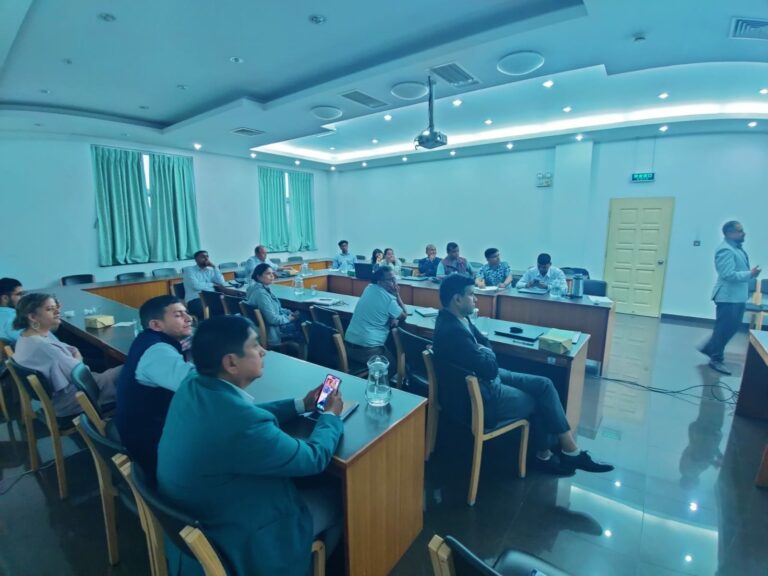
The researchers expressed appreciation to Sagar Dhakal and task force member Madan Paudel for facilitating the engagement, as well as to task force Chair Hom Chhetri and Member Secretary Ashok Subedi for their constructive feedback and support. The event was attended by researchers from Tribhuvan University and representatives from private institutions and non-governmental organizations working in the field of human-wildlife conflict.
The team also acknowledged earlier encouragement from Ojashwi Sherchand, Sudan Jha, and Ram Rimal. Appreciation was also extended to ACEM Chairman Ramesh Kumar Silwal, Principal Durga Prasad Sangroula, and Vice Principal Laxmi Bhakta Maharjan for supporting the institution’s ongoing research and development initiatives.
Concluding the presentation, the researchers urged the newly established Ministry of Science, Technology and Innovation, led by Mahabir Pun, to promote merit-based and rapid funding mechanisms for high-impact research. They emphasized that strategic investment in locally driven innovation is essential to solving Nepal’s pressing societal challenges while strengthening the country’s scientific research capacity and global academic standing.
“

 About Us
Comment