
Banking News – Nepal’s Supreme Court has annulled the government’s decision to allocate government advertisements and public notices exclusively to state-owned media, ruling that the government cannot violate the law under the pretext of fiscal austerity.
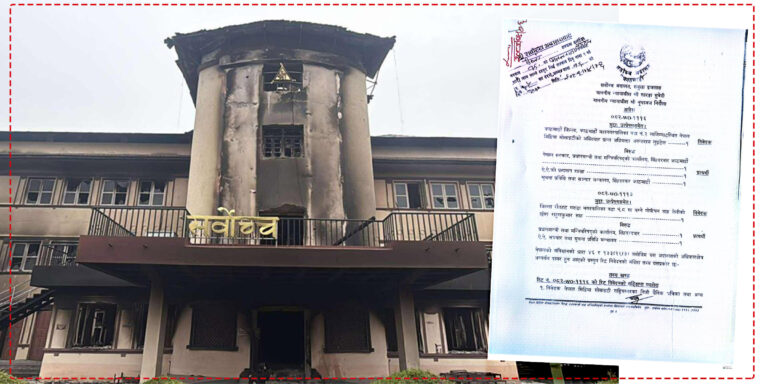
A joint bench of Justices Sharanga Subedi and Nripadhwaj Niraula held that the decision violated constitutional guarantees of press freedom, freedom of communication, and the right to equality. The ruling came in response to separate writ petitions filed by advocates Anantaraj Luintel and Rahul Kumar Sah on behalf of the Nepal Media Society. The court recently released the full text of its verdict, which was delivered on July 14.
In its written submission, the government argued that the policy was intended to reduce public spending and promote state-owned media. However, the Supreme Court ruled that while the government’s objectives may be legitimate, the measures adopted to achieve them must comply with existing laws.
The judgment states that the government cannot distribute public resources, including advertising, based on arbitrary or discriminatory criteria. Instead, the allocation of government advertisements must be objective, transparent, and equitable.
The court further concluded that the decision, issued at the secretary level on April 1, 2026, exceeded legal authority by depriving private media outlets of access to government advertising without any legal basis. It declared the directive unlawful and quashed it through a writ of certiorari.
The Supreme Court also referred to the Advertisement Act, 2019, noting that the Advertisement Board is the legally mandated body responsible for regulating and distributing government advertisements. Citing Sections 15 and 32 of the Act, the court emphasized that advertisements must be distributed proportionately through the Board and ruled that a secretary-level circular cannot override statutory provisions.
The landmark judgment is expected to strengthen press freedom, equal access to government advertising, and transparency in public resource allocation. The court observed that completely excluding private media from government advertisements could threaten their sustainability and ultimately undermine citizens’ constitutional right to freedom of expression.
“In a democratic system, the State may promote public media, but it cannot pursue policies that effectively eliminate private media. Such an approach is inconsistent with the Constitution,” the judgment states.
With this ruling, government advertisements and public notices must now be distributed to both state-owned and private media outlets in accordance with the law.

 About Us
Comment