
Banking News – Minister for Energy, Water Resources and Irrigation, Biraj Bhakta Shrestha, has stated that large irrigation projects can play a significant role in expanding agricultural production and employment opportunities while reducing the problem of population migration. During an on-site study of the Sunsari-Morang Irrigation Project and a session to hear the problems and grievances of affected locals and water consumers in Morang, Minister Shrestha said that irrigation should not be viewed merely as a matter of canal construction.
He expressed the view that since the return on investment in irrigation is realized through agricultural production, irrigation must be integrated with agricultural production, productivity enhancement, and farmer-centric programs. “It is not enough to just invest in irrigation; we must also create an environment where production and income increase,” he said. “The ministry is conducting a detailed study on how to integrate irrigation and agriculture programs.”
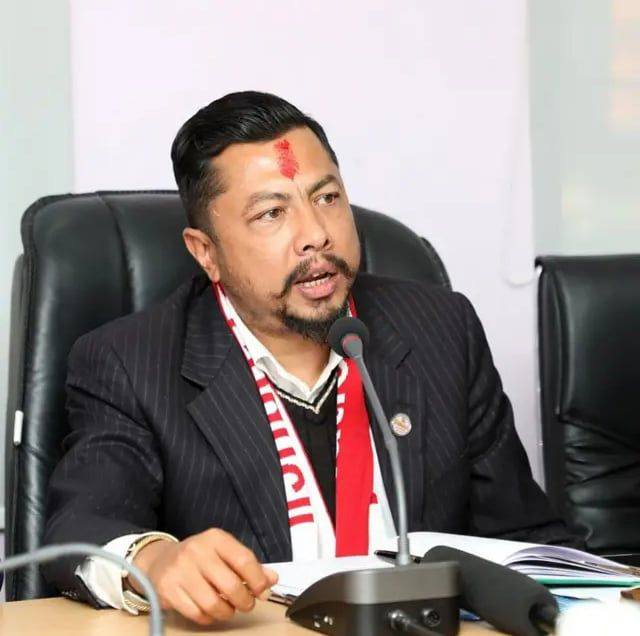
According to Minister Shrestha, the Sunsari-Morang Irrigation Project alone contributes over Rs 14 arab worth of agricultural production annually. He stated that this confirms that the return on investment in irrigation infrastructure is visible in the agriculture sector. He noted that effective operation of the irrigation system also contributes indirectly to energy production and other economic activities. He emphasized the need to make the irrigation system water-user-friendly, sustainable, and one that ensures the rights of local residents. He also expressed the view that nature-based solutions should be prioritized during the development of irrigation infrastructure.
Minister Shrestha stated that the sediment problem affecting irrigation and energy projects remains a long-term challenge. He said that measures to manage sediment carried by rivers and minimize its impact on projects should be incorporated into project design and operation from the outset. The Sunsari-Morang Irrigation System is one of Nepal’s largest and most significant irrigation systems, covering approximately 68,000 hectares of command area, with a large population directly linked to agriculture and irrigation.
Built with the assistance of the Government of India between 1964 and 1975, the system has been providing services for nearly six decades. However, after such a long period of operation, various structures within the system have deteriorated. Changes in the course of the Koshi River, sediment accumulation, and insufficient water reaching the intake have created additional challenges for the project’s regular operation. Particularly, the Koshi River carries a large volume of sediment to the Chatara area, and changes in the river’s course have affected water availability at the intake of the Sunsari-Morang Irrigation System. Project officials say that following the construction of the Chatara Bridge, the river’s main flow shifted toward the right bank, creating an additional challenge in maintaining adequate flow at the intake located on the left bank.
During the dry season, the amount of water available at the intake is limited to approximately 10 to 15 cubic meters per second. Although dredging could restore the capacity of the reservoir and canals, technical assessments indicate that this alone would not resolve the project’s long-term problems. Since the project was designed for a flow of approximately 60 cubic meters per second, it would be difficult to achieve that capacity without ensuring a permanent diversion structure and the required head.
In this context, Minister Shrestha said that immediate and long-term solutions should be incorporated into a single plan and implemented together. He said the Department of Water Resources and Irrigation should prepare and obtain approval for an integrated action plan covering short-, medium-, and long-term measures. He stated that the action plan should clearly specify the responsible agency, cost, source of funding, implementation timeline, and measurable outcomes for each activity. He also emphasized coordinating regular budgetary resources with sources such as the Sunsari-Morang Irrigation Rehabilitation and Improvement Program.
Minister Shrestha made it clear that short-term measures should not be treated as substitutes for long-term infrastructure. Although dredging, spur construction, and other management measures may be necessary in the immediate term, he said they should complement long-term designs and permanent structures. “There should not be a message that the problem has been solved simply because a dredger has been purchased,” he said. “Alongside short-term management, there must be a clear plan to construct the infrastructure required for a permanent solution.” Because the Koshi River carries large quantities of sediment every year and continually changes its course, major irrigation systems such as Sunsari-Morang have been facing persistent problems.
Therefore, Minister Shrestha said clear priorities must also be established on whether to prioritize the construction of new projects or invest in the rehabilitation and upgrading of existing major irrigation systems. He expressed the view that the government should prioritize the preservation, rehabilitation, and modernization of old irrigation systems while also objectively assessing the need for and feasibility of new projects before proceeding. He stated that if irrigation is linked with agricultural production, employment, and the local economy, it will directly contribute to reducing population migration from rural areas.

 About Us
Comment