
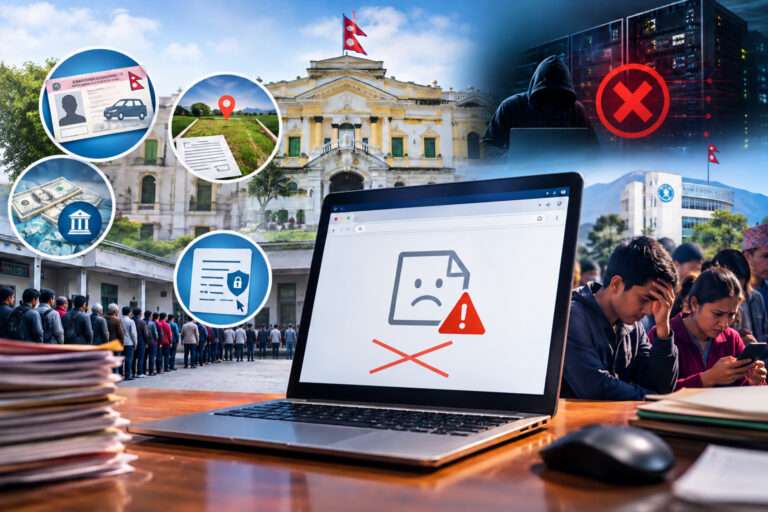
Banking News – Questions have been raised about the implementation of the government’s goal of making government services paperless and queue-free. Most government websites, which were shut down after a security vulnerability was found in the PHP coding system used for website construction, have not been able to come into operation even after four days. As a result, everything from online applications for driving licenses to land-related services and access to public information has been affected. While banks and financial institutions and some private sector entities that faced the same type of security problem improved their systems and brought services into operation within a few hours, government agencies have not been able to resolve the problem. This has raised questions about government digital service management, technical preparedness, and the service restoration process.
License to Malpot Services Affected
The closure of government websites has directly affected various online services used by the general public. With the Department of Transport Management’s website not in operation, the work of filling online forms for new applications for driving licenses has been affected. Service seekers are in a situation where they must wait for the website to open even to receive services said to be operational from Monday. Similarly, the Vehicle and Consignment Tracking System (VCTS) operated by the Revenue Investigation Department is also closed. With this system used during transportation disrupted, truck and container operators are forced to travel carrying bills and invoices.
With the Nepal Rastra Bank website also not in operation, there has been difficulty in obtaining important information including daily foreign exchange rates and interest rates. The central bank has had to rely on social media to publish such information. With the Department of Land Management and Records website not working, online land-related services operated through land service centers across the country have also been affected. Similarly, with the Kalimati Fruits and Vegetables Market Development Committee website closed, farmers, traders, and consumers have not been able to obtain information on daily wholesale prices.
A Problem Solvable in Hours, Services Disrupted for Four Days
According to experts in the information technology sector, personnel with access to the website and necessary technical expertise can resolve the problem within a few hours depending on the nature of the security vulnerability. The fact that a problem that could normally be resolved within one to one-and-a-half hours or at most three to four hours has persisted for a long time raises questions about the technical preparedness and coordination of government agencies.
It is said that private sector banks and financial institutions that faced the same type of problem made their systems secure and brought services into operation within 24 hours. However, the fact that most government agency websites had not come into operation even by Sunday indicates delays in the service restoration process. However, until clear details are made public on whether the problem seen in all websites is of the same nature, it is difficult to draw conclusions about the reasons for the delay in resolving the problem.
Passport and Labor Approval Services Operational
Not all government online services are disrupted. The Passport Department’s website and the online appointment system for passports have come into operation. The labor approval system of the Department of Foreign Employment is also in operation. Similarly, it has been stated that services related to national identity cards and the Nepal Electricity Authority’s bill payment system are also in operation. Although some agencies have been able to restore services, many other government websites remain closed, showing inconsistency in digital service delivery.
Impact on Government Information and Transparency
Government websites are not just a medium for service delivery. They are also an important medium for publishing government decisions, notices, statistics, reports, and information that citizens have a right to know. When websites are closed, not only service seekers wanting to obtain online services but also citizens, media, researchers, and businesspersons who depend on government information and statistics are affected. The prolonged closure of websites linked to the responsibility of making public information easily available can also affect transparency and access to information.
Questions Over Implementation of ‘Online, Not in Line’ Slogan
The government has set the goal of providing government services through digital means and removing the compulsion for service seekers to stand in line at offices. Even the election manifesto included the slogan “Online, Not in Line.” However, the situation where services remain disrupted for a long time even when a common technical problem appears on essential government websites has raised questions about the preparedness for implementing that goal. Earlier too, service seekers have repeatedly suffered due to technical problems in services including passports and driving licenses. The situation where the online bidding system also had to be reverted to paper processes during upgrading has raised further questions about the continuity of the digital system and alternative arrangements.
To make government digital services effective, building websites alone is not enough. A system is also needed to identify security vulnerabilities, make timely improvements, conduct regular monitoring, and provide immediate alternative arrangements when services are disrupted. The recent incident of most government websites being closed has shown the need to focus on both technical security and effective management to maintain the credibility of digital services.

 About Us
Comment