
Banking News— Nepal must prioritize the development of the tourism and hydropower sectors to revive its sluggish economy, according to Nabin Rijal, Chairman of the Rizal Group, who believes these industries offer the fastest path to increasing national income and foreign exchange earnings.
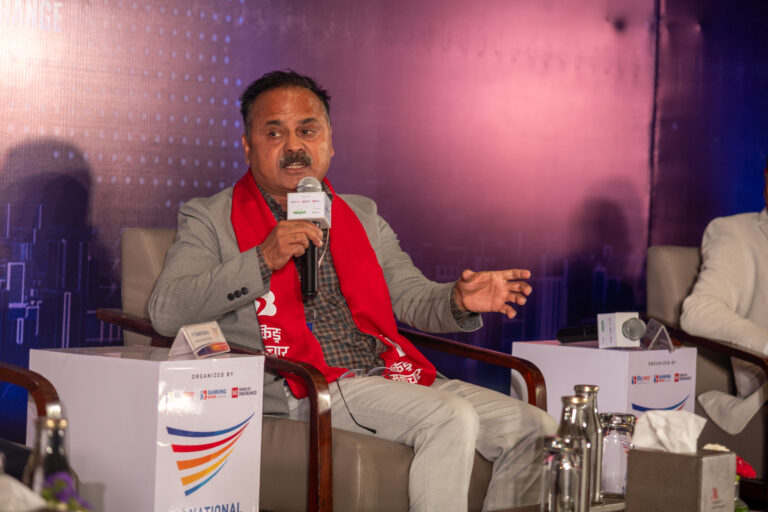
Speaking during the first session of the National Banking Discourse 2026, Rizal said Nepal’s industrial sector continues to contribute less than 20 percent of the country’s Gross Domestic Product (GDP), while weak domestic demand, declining purchasing power, rising recurrent government expenditure, and growing youth migration have slowed economic activity.
Although banks currently have sufficient liquidity and are in a comfortable position to finance new projects, industrial investment remains below expectations despite some improvement compared to last year, he said.
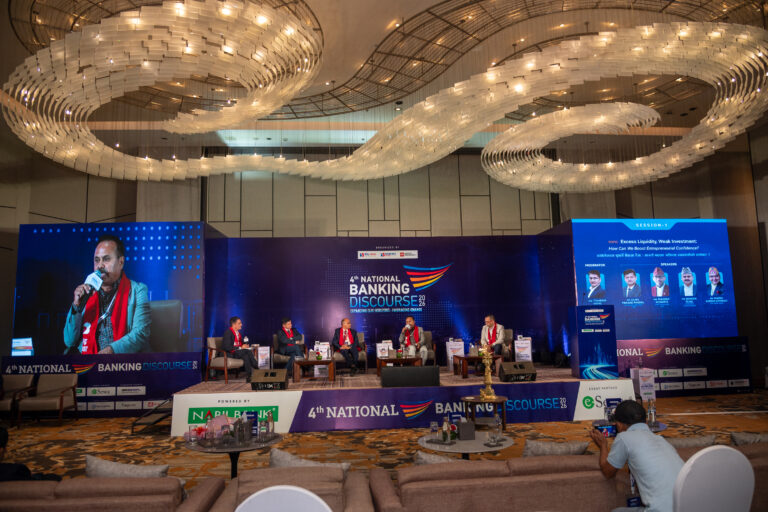
Rizal noted that the appreciation of the US dollar from around Rs 137 to Rs 152 has increased the nominal value of investments by about 7 percent, but emphasized that exchange rate gains alone cannot drive sustainable industrial growth or expand business activity.
He argued that Nepal should immediately focus on a few high-potential sectors to stimulate economic recovery.
According to Rizal, tourism remains the country’s most reliable source of immediate revenue and foreign currency earnings. While Nepal currently welcomes approximately 1.2 to 1.3 million international tourists annually, he believes the country’s geography and tourism potential are capable of supporting up to 10 million visitors each year.
He pointed out that popular destinations in neighboring India, such as Darjeeling, Shimla, Sikkim, and Kashmir, are often overcrowded, while Nepal’s equally attractive destinations including Ilam, Hile, Badimalika, Manang, and Mustang remain significantly underutilized.
Rizal stressed that tourism does not require substantial government investment. Instead, targeted promotion and more investor-friendly policies could significantly increase tourist arrivals.
He also suggested easing regulations for Indian visitors by allowing Indian currency notes of Rs 500, Rs 1,000, and Rs 2,000 to circulate in Nepal. Additionally, he recommended removing restrictions on the amount of foreign currency tourists can bring into the country, noting that Indian rupees collected from tourists could be utilized to help finance Nepal’s imports from India.
Hydropower, he said, represents another sector capable of generating immediate economic returns. Strengthening electricity transmission infrastructure and accelerating power exports to neighboring countries would substantially boost national income while laying the foundation for long-term economic development.
Rizal also called for practical reforms in the agricultural sector. While acknowledging that large-scale irrigation projects require several years to complete, he proposed implementing short-term agricultural production plans, including a strict policy discouraging the abandonment of cultivable land and introducing a comprehensive five-year agricultural strategy.

He recommended promoting modern commercial farming through clusters of at least 100 ropanis of land. Where landowners are unable to cultivate their property, the government or private sector should lease the land and begin commercial farming operations without delay.
Reflecting on past financial conditions, Rizal recalled that borrowing had become extremely difficult when bank lending rates reached 16 to 18 percent, placing a heavy burden on businesses.
He further argued that the private sector alone cannot transform the country’s economic condition. Businesses, he said, are responsible for paying taxes, electricity charges, and bank interest, but it is ultimately the government’s responsibility to utilize public revenue productively.
“The government should invest the taxes and revenue collected from the private sector in productive areas such as infrastructure, development projects, and sectors that generate immediate economic returns, rather than spending excessively on unproductive expenditures,” Rizal said.
He concluded that sustainable national development will only be possible if the government channels capital expenditure into productive investments, while emphasizing that entrepreneurs serve primarily as contributors to state revenue and economic growth.

 About Us
Comment