
Banking News – Federation of Nepalese Chambers of Commerce and Industry (FNCCI) President Anjan Shrestha has said that despite the government’s claim of ending load shedding, industries across Nepal continue to suffer from unannounced power cuts and poor-quality electricity, particularly in the country’s industrial corridors.
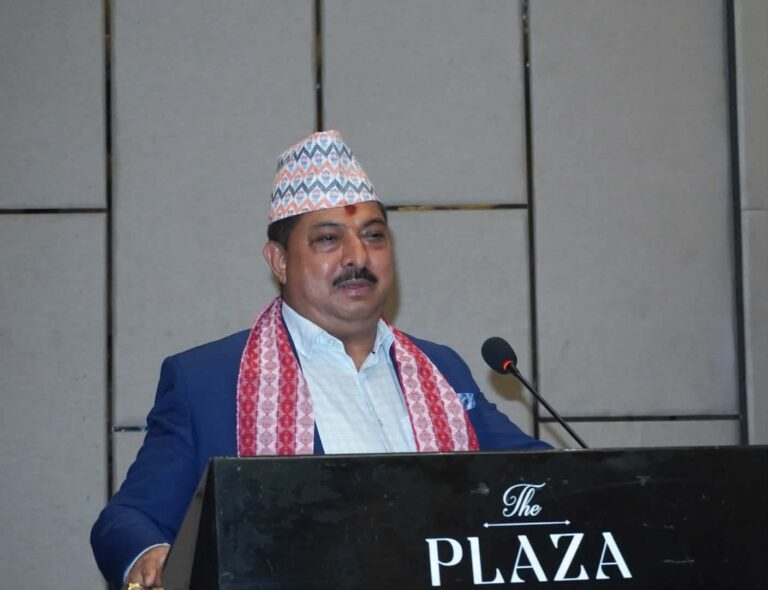
Speaking at an interaction program on “Challenges in Power Infrastructure Development and the Way Forward” organized by the Nepal Economic Journalists Association (NAFIJ), Shrestha stated that industrial areas in the Terai are still struggling to receive the quality and reliability of electricity required for uninterrupted production.
According to Shrestha, industries are frequently instructed by the Nepal Electricity Authority (NEA) over the phone to limit electricity use to lighting during certain periods and avoid operating production machinery, effectively forcing factories to endure unannounced load shedding despite the absence of officially declared power cuts.
“There may be no load shedding in Kathmandu and other urban areas, but industries in the Terai and border regions continue to experience unannounced electricity restrictions,” Shrestha said. “Poor voltage quality damages industrial equipment, increases production costs, and disrupts manufacturing operations.”
He stressed that the government should take the issue seriously, noting that while electricity generation has increased significantly, transmission and distribution infrastructure has not expanded at the same pace, preventing industries from fully benefiting from the country’s growing power supply.
Shrestha further urged the media to highlight the challenges faced by industries, arguing that the government’s declaration of ending load shedding does not reflect the actual situation experienced by manufacturers.
“Simply saying that load shedding has ended is not enough. The real challenges faced by industries must also be brought to light. Every loss suffered by an industry ultimately becomes a loss for the national economy,” he said.
He called on the government to expand transmission infrastructure, ensure stable energy policies, and provide reliable, high-quality electricity to create a more industry-friendly power supply system capable of supporting Nepal’s industrial and economic growth.

 About Us
Comment