
Banking News – Nepal Prime Minister Balendra Shah on Sunday began his first visit to India, during which the two sides are looking to reset the overall relationship and conclude agreements to deepen cooperation in areas such as energy, connectivity, railways, infrastructure, technology, human resource development, and climate change.
This is also Shah's first bilateral foreign visit, reflecting the importance both sides attach to their ties. His talks with Prime Minister Narendra Modi on Monday are expected to provide political direction for charting the course for the bilateral partnership for the coming years and explore new avenues of cooperation.
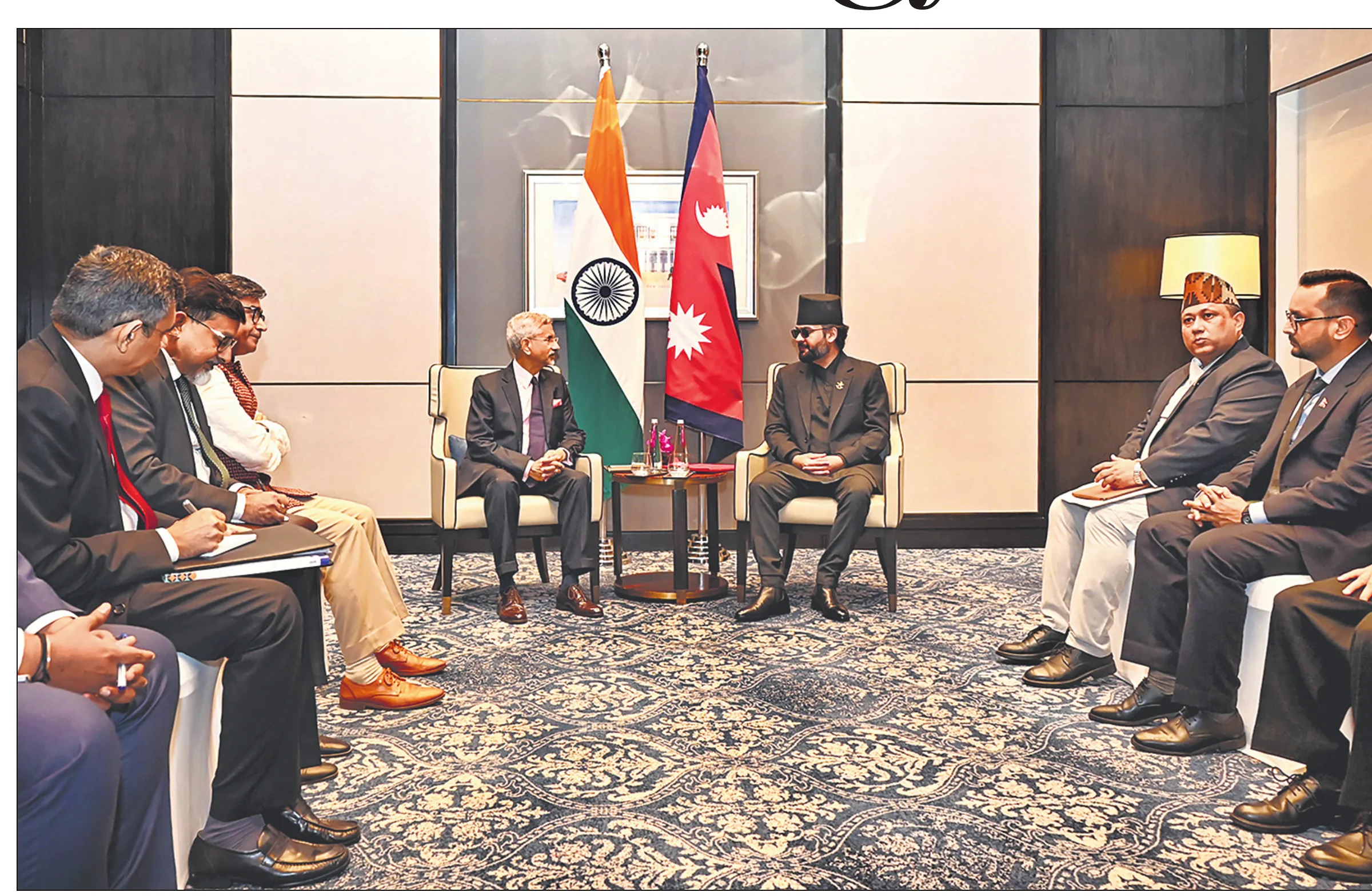
Shah, 36, was received on his arrival in New Delhi by Minister of State for Commerce Jitin Prasada. His first official engagement was a meeting with External Affairs Minister S Jaishankar, who said on social media that India "cherishes the special friendship" with Nepal. The Nepal Prime Minister's Office said they discussed various aspects of bilateral ties, especially cooperation in connectivity, trade, transit, commerce, energy, culture, education, and people-to-people ties.
While Modi and Shah have interacted over the phone and exchanged social messages, their first in-person meeting on Monday will set the stage for a much-needed reset in the relationship following the Gen Z uprising in 2025, which unseated KP Sharma Oli's government and brought the rapper-turned-politician and a younger generation of leaders from the Rastriya Swatantra Party (RSP) to power.
The two prime ministers will virtually inaugurate India-backed connectivity and energy initiatives that have been completed and lay foundation stones for new projects, people familiar with the matter said. Several "forward-looking" agreements and understandings in different areas will also be concluded, they said.
The major outcomes are expected in areas such as development cooperation, hydropower, connectivity, railways, climate change, disaster resilience, infrastructure, and technology. A rail link between Ayodhya and Janakpur is also expected to be unveiled.
Shah's visit comes at an opportune time, as there is considerable synergy between the national priorities of India and Nepal in economic growth, social development, infrastructure expansion, adoption of technology, and addressing challenges such as natural disasters and climate change, the people said. The discussions between Modi and Shah will provide political direction for charting the future of bilateral ties over the coming years, they said.
While India has proposed a joint vision for the long-term development of bilateral ties, Nepal has sought a $2-billion economic package, including $1 billion in grants, and aid for the reconstruction of areas devastated by the Bhote Koshi flash floods in August.
Nepal has also asked for the Kathmandu-Mahendranagar air corridor to be made two-way. International flights are currently permitted only to leave Nepal via this route.
Shah is accompanied by a 35-member delegation that includes foreign minister Shishir Khanal, finance minister Swarnim Wagle, senior advisers to the prime minister, and business representatives. The Nepal-India Business Forum will be held during the visit, where Shah is expected to seek more investment from India.
India and Nepal share a unique and comprehensive relationship characterised by open borders, mutual trust, shared traditions, and close people-to-people ties. They also have more than 40 bilateral institutional mechanisms to advance cooperation across sectors.
India is Nepal's largest trade, transit, and investment partner. Nepal enjoys duty-free access to Indian markets, while India is also its biggest export destination, receiving almost 80% of Nepal's exports. India is the largest source of foreign investment in Nepal, accounting for almost a third of total FDI.
India has implemented more than 600 high-impact community development projects, worth more than Nepali 1,662 crore, across 74 districts of Nepal.
Major connectivity projects include cross-border railway lines, a petroleum product pipeline, and integrated check posts.
Besides providing support after the Gorkha earthquake of 2015 that resulted in the reconstruction of 50,000 houses, 71 educational projects, and 128 health facilities, India provided humanitarian assistance and disaster relief after the flash floods in August this year, including 140 tonnes of emergency supplies.
Comments
Thank you! Your comment has been received. It will appear here once it is approved.