
Banking News — The government led by Balendra Shah (Balen) has completed its first 100 days in office, highlighting a series of economic reforms aimed at improving public spending efficiency, attracting investment, strengthening revenue administration, and reviving dormant state-owned industries.
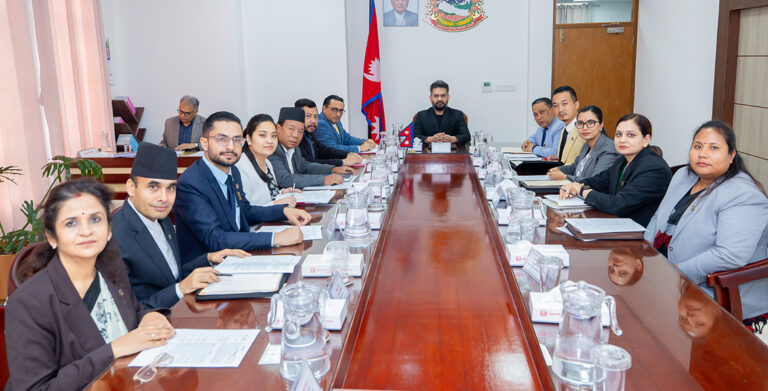
During the review period, the government announced plans to reduce the number of ministries to 18 and abolish several overlapping government agencies. According to government estimates, the restructuring could save approximately Rs. 20 billion annually.
To encourage private sector participation and foreign investment in public infrastructure, the government has introduced the Alternative Development Finance Act, 2083, creating a legal framework for the use of innovative financing instruments in priority sectors.
As part of efforts to improve fiscal discipline and accelerate capital expenditure, the government amended the Financial Procedures and Fiscal Responsibility Regulations, 2077, delegating authority to transfer capital budget allocations to ministry secretaries. The move is expected to simplify administrative procedures and improve development spending.
Based on recommendations from the High-Level Economic Reform Recommendation Commission, the government has initiated the process of repealing 15 outdated laws. It has also prepared amendments to the Bank and Financial Institutions Act (BAFIA), 2073 to mobilize funds held in bank accounts that have remained inactive for more than 10 years. In addition, the government has begun legal reforms to utilize the Rs. 84.84 billion currently held across more than 196 government funds.
To modernize revenue administration, all major tax-related services including tax return filing and tax clearance certificates have been made available online through the Inland Revenue Department. The implementation of an online customs valuation system and an online query module is expected to reduce trade costs and promote a contactless revenue administration system.
Taxpayer services, including the issuance of Permanent Account Numbers (PANs), have also been expanded through the Office of the Company Registrar and 120 local governments. The government has introduced an e-Pension Verification System, allowing pensioners to complete verification remotely.
On the international front, Nepal has made progress toward removal from the Financial Action Task Force (FATF) grey list. Following an assessment of reforms implemented through April 2026, FATF acknowledged that Nepal had fully completed three of the 15 required action items and made partial progress on four others, resulting in an improved evaluation.
To strengthen efforts against revenue leakage, the government has decided to dissolve the Revenue Investigation Department, transferring its responsibilities to the Inland Revenue Department and the Department of Customs. A dedicated operational team has also been mobilized to combat tax evasion.
A total of 841 taxpayers with annual transactions exceeding Rs. 200 million have been integrated into the Central Invoice Monitoring System, while businesses with annual turnover above Rs. 100 million are scheduled to be included from the current month.
To enforce mandatory Maximum Retail Price (MRP) regulations, 253 monitoring teams inspected 1,692 companies and firms, imposing fines totaling Rs. 7.116 million on 102 businesses found violating pricing rules.
The government has also transferred vehicles that had remained stranded at customs checkpoints for years to the Nepal Police and other government agencies, while officials suspected of involvement in revenue leakage have been suspended pending investigation.
In response to rising global fuel prices caused by ongoing conflict in West Asia, the government introduced a 50 percent reduction in customs duties and infrastructure development fees on the import of diesel, petrol, and kerosene, aiming to ease the burden on consumers.
To improve the investment climate, the Investment Board Nepal has fully operationalized its One-Stop Approval System, while completing investment structure studies for seven major infrastructure projects. The government has also advanced bilateral negotiations on double taxation avoidance agreements with the United Kingdom and the United Arab Emirates (UAE).
In addition, a Transfer Pricing Directive has been issued, and international tax transparency standards are being implemented through the Finance Bill, 2083.
Efforts to revive state-owned industries have also gained momentum. The government has approved pilot-scale production at the Hetauda Textile Industry under the supervision of the Nepali Army, while preparing a Rs. 5 million cost estimate for repairing its infrastructure.
Due diligence audits have been completed for Gorkhakali Rubber Industry, Hetauda Cement Industry, Janakpur Cigarette Factory, and Nepal Metal Company, with the final draft report for Udayapur Cement Industry also completed.
A preliminary geological study has confirmed an estimated 112.1 billion cubic metres of natural gas reserves in the Jaljale area of Dailekh. According to the government, the resource has the theoretical potential to generate 200 MW of electricity, produce 2,200 tonnes of urea fertilizer per day, and supply vehicle fuel. Plans are underway to establish a subsidiary company under the Nepal Oil Corporation to oversee commercial extraction.
In the mining sector, the government has tightened regulation by seeking clarification on 27 inactive mining licences, while cancelling three extraction licences and 122 exploration permits. Detailed feasibility studies, including 12 core drilling operations, have been completed in the Dhaubadi and Rate Khola iron ore deposits, and environmental impact assessments have commenced.
The government has also streamlined administrative procedures by limiting approval processes to a maximum of three levels, while granting greater authority to representatives of 14 government agencies operating through the One-Stop Service Centre under the Department of Industry.
To strengthen industrial and commercial security, a rapid response mechanism has been approved, ensuring that 15,439 Armed Police Force personnel remain on standby across all 77 districts to respond to emergencies.
To support businesses affected by the Gen Z movement, the government has introduced an Integrated Business Recovery Plan, offering tax relief, financial concessions, and other monetary support measures. Under a special arrangement facilitated through Nepal Rastra Bank, borrowers directly affected by the unrest have been allowed to restructure and reschedule their loans, a move the government says has helped restore confidence within the private sector.

 About Us
Comment